Best Time to Visit Tuscany: A Decision Guide for British Travellers
When to visit Tuscany is one of those questions that doesn't have a single answer, it has several, and which one is right depends entirely on what you want from your trip. A late-May couple wanting an unhurried wine tour will love a window that a mid-August family of seven finds claustrophobic. A photographer chasing the harvest light has different priorities to a group celebrating a 50th birthday. And the weather, the crowds, and the prices all swing in different directions at different times of year.
This guide is structured around the question that actually matters: what kind of Tuscany trip are you taking, and which window suits it best? It draws on UK search demand patterns, on-the-ground booking data from across our villa collection, and the practical experience of placing British guests at Tuscan properties for over a decade.
The Straightforward Answer (For Most Visitors)
For most British visitors taking a 7-10 day villa holiday, late May to early July, or the second half of September, is the sweet spot. These two windows combine reliably warm weather, working villa pools, the Tuscan landscape at its most photogenic, and crowds and prices well below the mid-July to mid-August peak. If you can pick a week that falls inside one of these windows, that's probably your answer.
Two weeks stand out as particularly strong: the first week of June and the last week of September. June begins with the landscape still green from spring rain, the wheat fields golden but the grass not yet baked, and pool weather genuinely warm. Late September brings the start of vendemmia, softer light that landscape photographers wait for, and pool weather that holds reliably until early October in unheated villas.
If you need pool-usable weather but want to push into shoulder season, April-early May and early October can work, but they require a heated pool to be reliable. See the Tuscany weather guide for the month-by-month detail and pool-usable dates by villa type.
Best Time by What You're Going For
The single biggest factor swinging the answer is what you actually want from the trip.
For a Villa Pool Holiday
Sweet spot: Mid-June, the first three weeks of July, and the second half of September.
Pool-centric villa holidays need three things: warm enough water (26°C+), warm enough air (25°C+ for outdoor lounging), and long enough days that an afternoon at the pool isn't squeezed against an early sunset. Mid-June to mid-September delivers all three. Most unheated villa pools become reliably warm from late May; sea-level coastal pools warm earlier than hill-country pools at altitude. See our villas with private pool collection for properties matched to the season.
Avoid: Late July through mid-August unless you actively want peak-season heat. Inland afternoons regularly hit 35°C, and the pool becomes the only viable activity from 1pm to 5pm. Sun loungers are at a premium in larger villas with mixed groups.
For Wine & Vendemmia (the Harvest)
Sweet spot: Mid-September to early October.
Vendemmia, the wine harvest, is the single most atmospheric reason to visit Tuscany. The vineyards are full of pickers, the cellars are working at full tilt, and the air around wine estates carries the smell of crushed grapes. Brunello di Montalcino and Chianti Classico Sangiovese are typically picked between 15 September and 5 October, varying year-to-year by the spring weather. Most quality producers welcome visitors during harvest with cellar tours and tastings; some run participatory experiences (a morning of picking followed by lunch at the estate).
Wine-focused visitors should book at least 6-9 months ahead, peak Brunello cellars sell out their tasting slots through August. Our Val d'Orcia and Chianti destination pages cover the wine geography in detail.
For a Tuscan Villa Wedding
Sweet spot: Late May to mid-June, and the first three weeks of September.
Wedding planners work the calendar around three constraints: the weather (warm but not 35°C, low rain risk), the venue's availability (most wedding villas hold one wedding per week and book 12-18 months ahead), and the guest experience (long evenings, cool sunsets, comfortable for outdoor seating). May-June and September are stronger than July-August on every count.
October is also workable for late-season weddings, softer light, autumn colours, lower rain risk than November, but pool use becomes marginal for the post-wedding villa stay. See our wedding villas in Tuscany collection for venues licensed for civil ceremonies and proven event capacity.
For Families with School-Age Children
Sweet spot: The first three weeks of July, the late-May UK half-term week (when it falls late in the month), and the late-October UK half-term week (with caveats).
British school holidays force the calendar, the late-July to early-September window is the only realistic option for many families, and it overlaps with the hottest, busiest period in Tuscany. The reality is that a family villa holiday in mid-July is excellent if you have a good pool, a flexible attitude to mid-day heat, and don't expect to do extensive sightseeing in the afternoons. Our family villas collection lists properties with the pool safety, garden space, and equipment needed for younger children.
Late October half-term is a strong shoulder-season alternative for families with older children, warm afternoons, no pool, autumn colours, and considerably lower prices. Late May half-term works similarly if it falls in the second half of the month.
For Couples & Quiet Retreats
Sweet spot: Late September to mid-October, mid-April to mid-May.
Couples without school-holiday constraints have the best of both worlds, they can pick the windows when villa rentals are 30-40% cheaper, restaurants have time and space, and the towns feel like they belong to their residents again. The Val d'Orcia in late September is particularly good for this: empty roads, the Brunello hills in their best light, and small-town restaurants where you might be the only non-Italian table.
For Photography
Sweet spot: Late May, late September, late October.
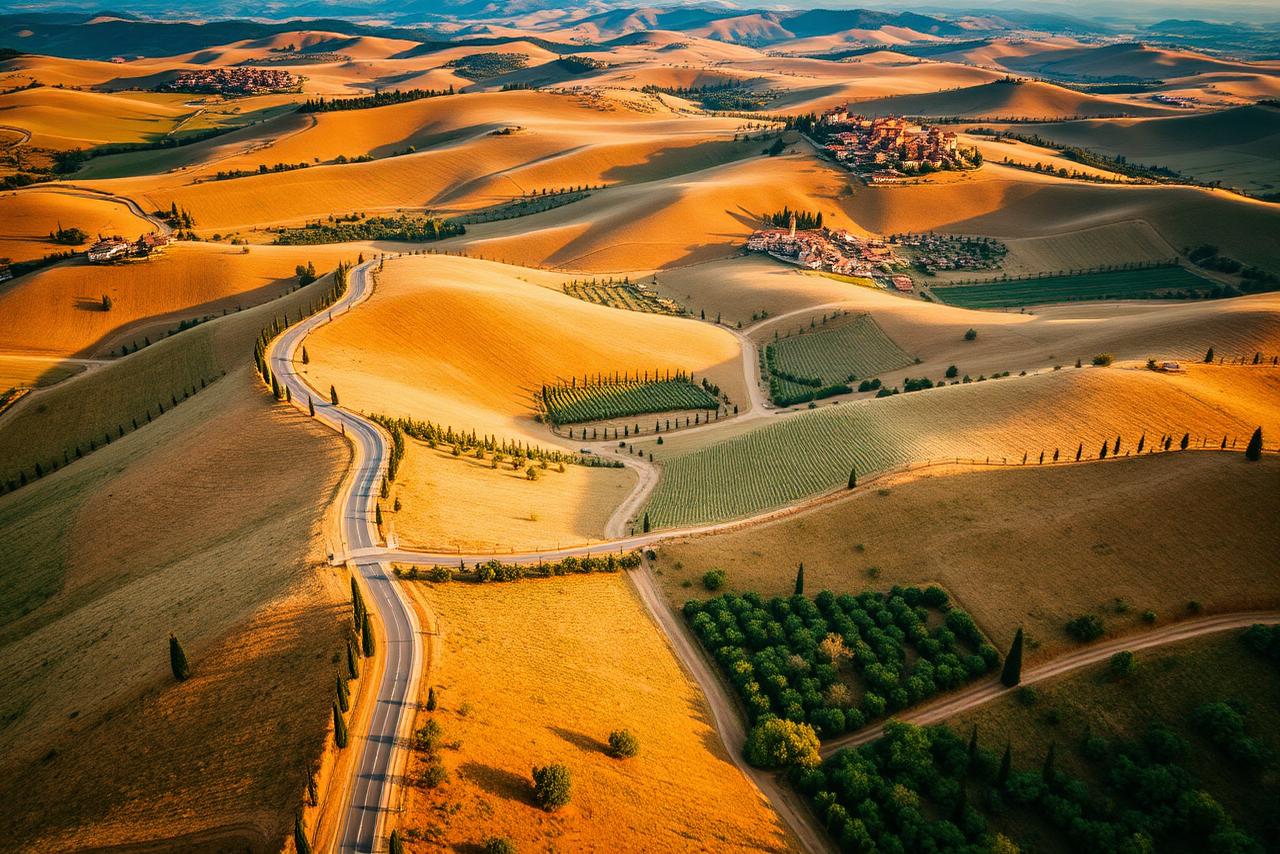
The clichéd Tuscany of cypress avenues against pale hills photographs best when the light is angled, late May before the wheat is fully golden, late September when the harvest light kicks in, and the second half of October when autumn colour reaches the vineyards. Mid-summer light is too harsh and overhead. Photographers consistently rate mid-September to early October as the strongest fortnight of the year.
For the Tuscan Coast (Beaches)
Sweet spot: Mid-June to mid-July, and the second half of September.
The Maremma and Versilia coastlines warm later than the inland country and stay swimmable longer. Sea temperatures peak at 25-26°C in late August. Italian beach culture means crowds at popular spots in August; the second half of September gives you swimmable seas with a fraction of the crowd. See our Tuscan Coast destination guide for beach areas and coastal villa logistics.
For Florence & Siena Day Trips
Sweet spot: May, June, October.
City-sightseeing in Tuscany is best in shoulder-season, the major sights (Uffizi, Accademia, the Duomo, the Piazza del Campo) are uncomfortable in mid-summer heat, particularly for queues outside. May is the best Florence month (warm enough for evening dinners outdoors, cool enough for a full day of museums), with September and October close behind.
Best Time by Region, Why Location Changes the Answer
Tuscany is not climatically uniform. The best week for a Chianti villa is not necessarily the same week for a Tuscan Coast property, and the Val d'Orcia at altitude tells a different story again.
Chianti
Best months: late May through July, and September. Chianti sits at moderate elevation (Greve 320m, Radda 530m) which moderates summer heat by 2-3°C versus the Florence basin. The Chianti Classico zone is at its prettiest in late May (vineyards green) and mid-September (vendemmia approaching). July and August are warm but reliably so, with afternoon temperatures of 30-32°C tempered by hill-country breezes.
Val d'Orcia
Best months: May, June, and the second half of September. Val d'Orcia's altitude makes spring late and autumn early, wildflowers don't fully arrive until early May, and the first frosts hit by mid-October. Mid-June through early September delivers reliable summer weather but the dramatic light the area is famous for is strongest in May-June (green hills, wheat ripening) and late September (golden stubble, low sun, harvest atmosphere).
Tuscan Coast (Maremma & Versilia)
Best months: mid-June to mid-July, and second half of September. The coast warms slower than the inland but holds its swimming season longer. Mid-July to mid-August is the peak Italian beach period and consequently the busiest. Late September gives you 25°C+ sea temperatures with a fraction of the crowds.
Florence (city break)
Best months: May, June, late September, October. The city's basin microclimate concentrates summer heat, Florence regularly runs 2-4°C hotter than the surrounding countryside in July and August, and the air has a still, heavy quality that makes sightseeing genuinely uncomfortable. The shoulder seasons are dramatically better for the city.
Worst Times to Visit Tuscany (Or: When to Think Twice)
There are no genuinely bad months, Tuscany has something to offer year-round, but several windows have specific drawbacks worth knowing.
Mid-July to mid-August (peak summer): Hot, crowded, and at peak pricing. Smaller restaurants and shops close for ferragosto (the Italian summer holiday, particularly 15 August onward). Major sights run long queues. Villa availability tightens 12+ months ahead. Workable with a good pool and a slow rhythm; difficult for sightseeing-focused trips.
Late October to mid-March (deep winter): Cool to cold (highs of 9-14°C), pools closed, shorter days. Working perfectly well for Florence, Siena and Lucca city breaks but not for villa-pool-centric holidays. Many smaller agriturismo and rural villas close for the season between November and March.
The week before Easter: Tuscany attracts a strong religious-tourism crowd and prices spike for one week. Major sights are crowded; transport is busy. Easter Monday is a public holiday with much closure.
Mid-November: The wettest month of the Tuscan year, with rain commonly arriving in multi-day systems rather than passing showers. Light is short and grey. Wine cellars are quiet (the vintage is in barrel) and the landscape has lost its autumn colour.
Month-by-Month, One-Line Verdicts
January: Quiet, cheap, cold; Florence-Siena-Lucca city breaks only.
February: Same as January with more daylight and the Carnevale season in some towns.
March: First half wintry, second half springlike. Good for cities and food, not yet for villa pools.
April: Spring properly arrives. Easter spike. Pool use marginal in unheated villas.
May: Excellent. Warm afternoons, cool evenings, landscape green. Villa pools reliably comfortable from late in the month. Strong all-rounder.
June: The single best villa-holiday month. Long days, reliable warmth, wedding season in full swing, prices below July peak.
July: Hot but workable. Peak villa demand begins. Pool weather guaranteed.
August: Peak heat, peak prices, peak crowds, ferragosto closures mid-month. Best with a good pool and modest sightseeing ambitions.
September: The other contender for best month. Vendemmia, golden light, shoulder pricing, comfortable temperatures, pool reliable through to month-end.
October: First half excellent (autumn colour, warm afternoons, harvest finishing). Second half cools fast; pool use ends for most unheated villas by 15 October.
November: Wet, grey, off-season. Cities still work; rural villas mostly closed.
December: Cold, festive, quiet. Florence at Christmas is genuinely lovely; rural villas largely closed.
Choosing Your Window
If you can pick freely, choose the first three weeks of June or the second half of September. If you need school-holiday weeks, the first half of July is the most comfortable option in the summer block. If you're chasing a particular experience, vendemmia, a wedding, a quiet couples' retreat, the calendar opens up considerably outside these windows.
Once you have your window, browse our Tuscany villa collection to find the property that fits the trip. We are happy to advise on the seasonal trade-offs of specific villas, pool orientation, altitude effects, distance to towns and beaches, by phone or email when you're narrowing down.
Frequently Asked Questions
What is the best time to visit Tuscany?
Late May to early July, or the second half of September. These windows combine reliably warm weather, working villa pools, the landscape at its most photogenic, and crowds and prices well below the July-August peak. April and early October are also strong if you don't need pool weather.
When is the cheapest time to visit Tuscany?
November through March is the cheapest period, with villa hire often 30-50% below summer pricing. May and October are the best-value months that still offer comfortable weather and pool use. Avoid the second half of August (Italian holiday peak) and the week before Easter for the highest prices and least availability.
When is the worst time to visit Tuscany?
Mid-July to mid-August is the most challenging window for British visitors, peak heat (often 35°C+), peak crowds at the major sights, peak villa prices, and many smaller restaurants and shops closed for ferragosto. November is the wettest month. December and January are quiet but pool-based holidays don't work.
When is wine harvest (vendemmia) in Tuscany?
Late August through early October, depending on the year, the variety, and the region. Brunello and Sangiovese in the Val d'Orcia and Chianti Classico are typically picked between mid-September and early October. Vendemmia is a particular draw for wine-focused visitors but books up early, plan 6+ months ahead.
When is the best time for a Tuscany villa wedding?
May, June and September are the strongest wedding months, warm weather without the August heat, low rain risk, and the landscape at its most photographic. July is also popular but mid-afternoon temperatures of 35°C+ make outdoor ceremonies challenging. Most Tuscan wedding villas book 12-18 months in advance for these months.
When can you swim in Tuscany?
Unheated villa pools are reliably comfortable from late May through late September. Heated pools (a small but growing minority of properties) extend the swimming season from late April through mid-October. Sea swimming on the Tuscan coast works from mid-June through early October.
Is October a good time to visit Tuscany?
Yes, particularly the first half of October. The weather remains mild (highs of 22-24°C), the autumn colours begin in the vineyards, and the wine harvest is finishing in the Brunello hills. Crowds are thin and pricing has dropped from peak. Pool use becomes marginal toward the end of the month for unheated properties.
Should I avoid Tuscany in August?
Not necessarily, but plan around the heat and the crowds. Italian schools break for August, and many Italians take their summer holiday between 10-25 August (ferragosto). Major sights are at their busiest, smaller villages can feel deserted as locals head to the coast, and afternoons are often uncomfortably hot. A villa with a good pool and a willingness to embrace the slow rhythm makes August work; sightseeing-focused trips are better in June or September.
When does Tuscany get cold?
Genuine cold sets in mid-November and runs through February. December and January average highs of 9-11°C with overnight lows around freezing in the hills. Frost is common in the Val d'Orcia. Snow is occasional but not reliable. Spring warmth returns in the second half of March.
When is the best time for a Tuscany family villa holiday?
For families with school-age children, the school summer holiday (mid-July to early September) is the natural window, warm pool weather, long evenings, and the holiday rhythm that suits children. Half-term in late October works for shoulder-season trips, though pool use is marginal. May half-term is excellent if it falls late in the month.