A UNESCO World Heritage Landscape
Val d'Orcia
The Val d'Orcia is a painter's dream, golden wheat fields, lone cypress trees, and thermal springs set beneath vast skies. This UNESCO-protected landscape south of Siena is home to Pienza's famous pecorino cheese, Montalcino's Brunello wine, and some of the most iconic views in all of Italy.
Quick Answer
Val d'Orcia is a UNESCO World Heritage valley south of Siena, famous for its sweeping clay hills, lone cypress trees, and honey-coloured hilltop towns like Pienza and Montalcino. Our exclusive country villas and farmhouses here offer unmatched pastoral views and genuine privacy, with easy access to Montalcino's Brunello estates and the historic spa town of Bagno Vignoni.
If you've seen photographs of Tuscany, cypress-lined roads running across pale clay hills toward a hilltop farm, or an infinity pool with an improbable view, there's a reasonable chance you were looking at the Val d'Orcia. The valley is UNESCO World Heritage-listed, and the landscape genuinely matches its reputation. In late afternoon, the light does things here that it doesn't quite do anywhere else.
Villas in the Val d'Orcia tend to be more remote than in Chianti, you may find yourself 15-20 minutes from the nearest village with a restaurant. Most guests consider this precisely the point. The properties here are often former farmhouses on larger estates, with the kind of privacy and views that justify the longer drive from Florence airport.
What to Expect in Val d'Orcia
Thermal Baths
Soak in natural hot springs at Bagno Vignoni and Saturnia's cascading pools.
Brunello Wine
Tour the prestigious cellars of Montalcino and taste one of Italy's finest reds.
Pienza & Pecorino
The 'Ideal City' is famed for its artisan pecorino cheese and Renaissance piazza.
Iconic Views
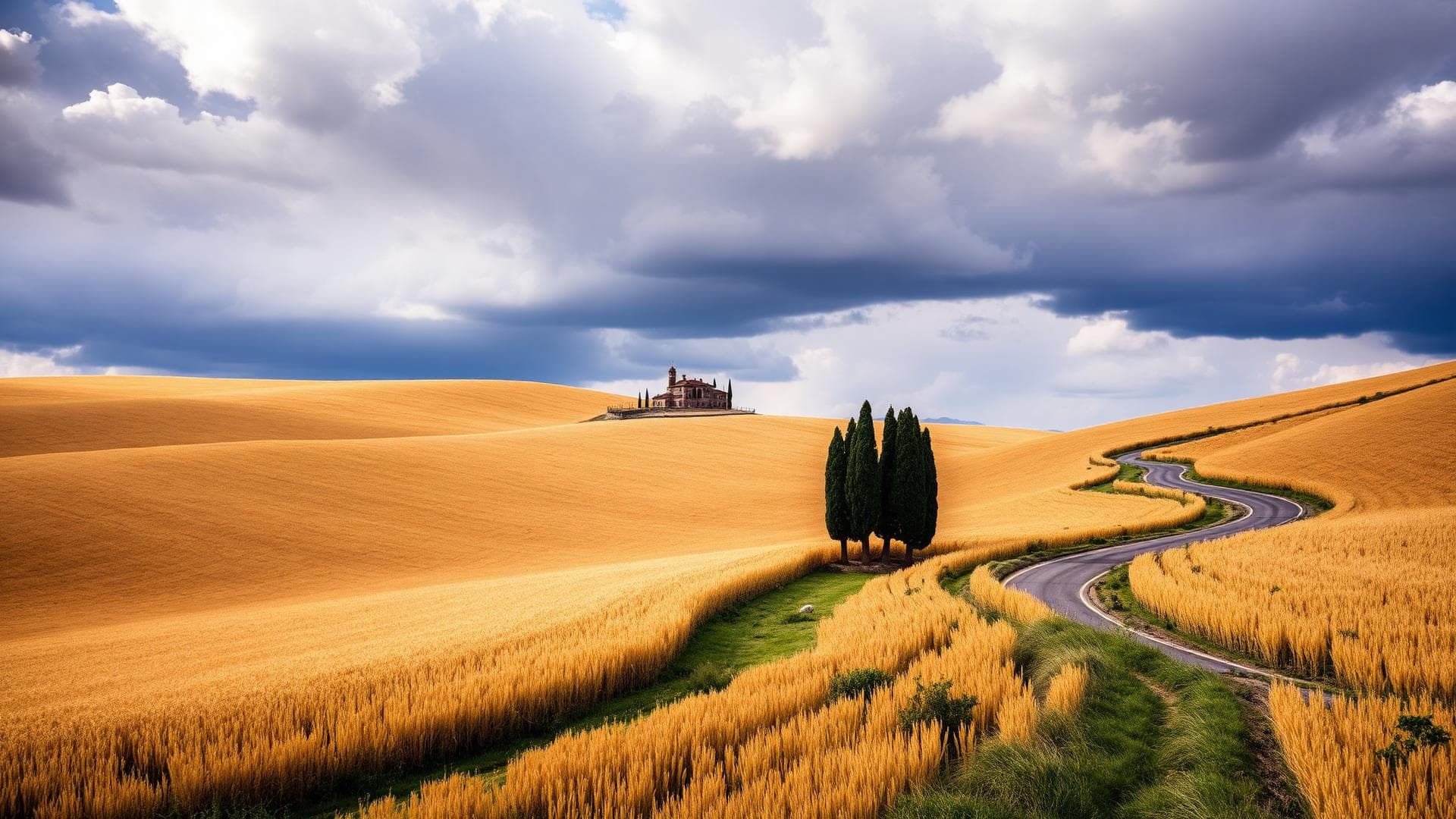
Capture the famous Gladiator road, Cappella della Madonna di Vitaleta, and endless horizons.
The Landscape
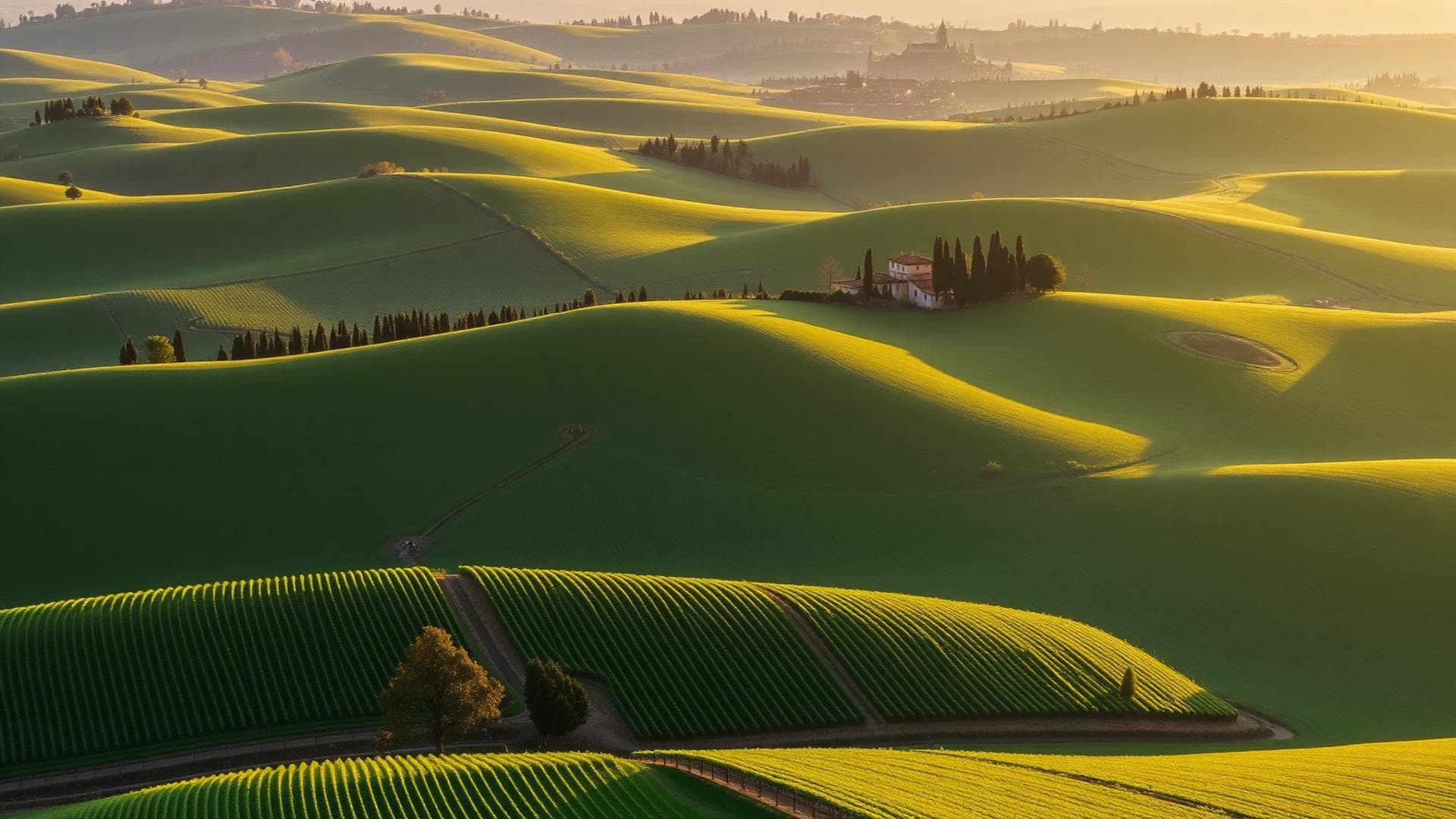
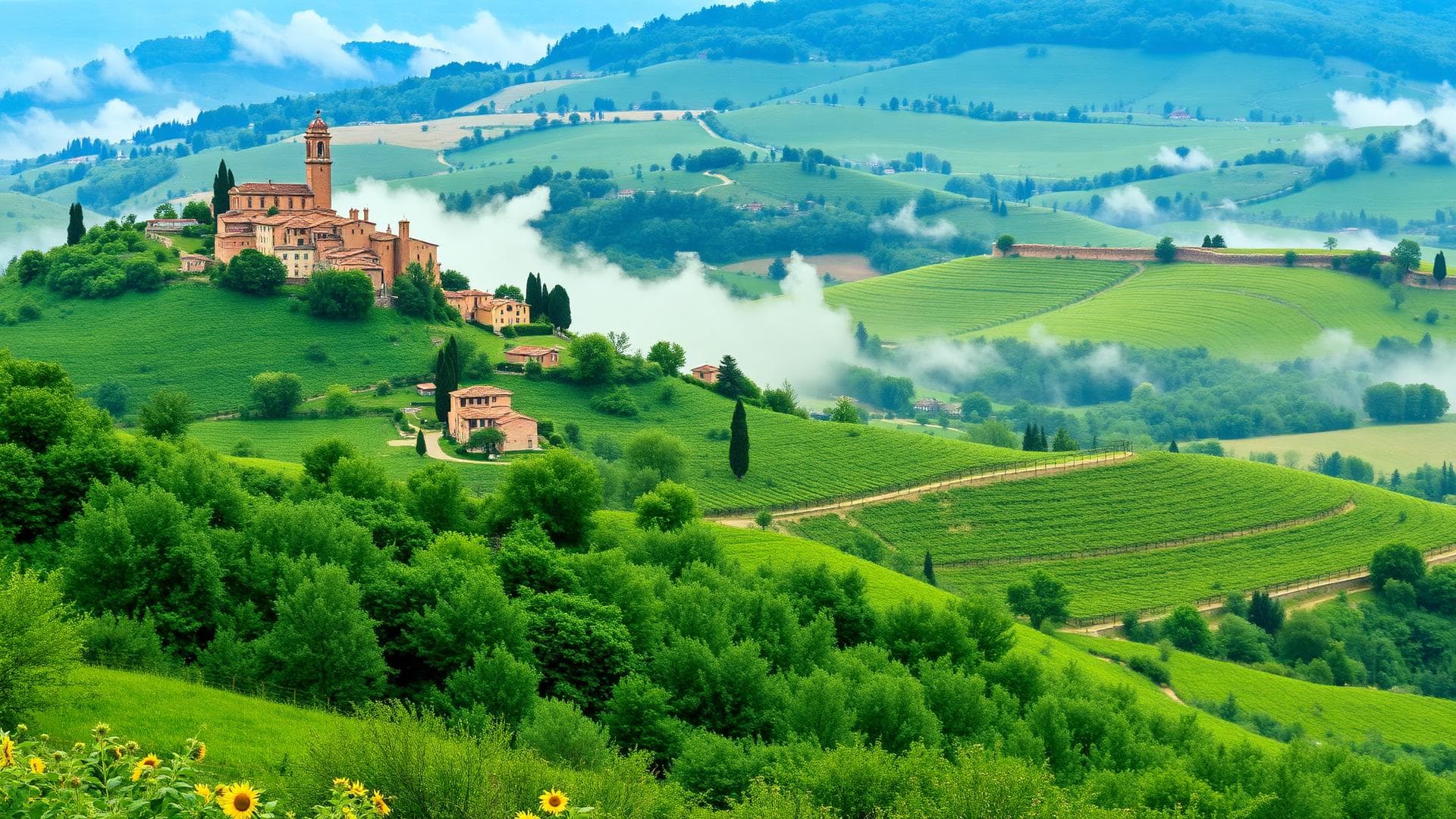
The Val d'Orcia earned its UNESCO World Heritage status for a reason that becomes obvious within minutes of arriving: the landscape looks painted. Pale clay hills rise and fall in perfectly curved waves, lone cypress trees mark the ridgelines, and the occasional stone farmhouse sits in exactly the right position on exactly the right hill. It's the landscape you see on the covers of travel magazines, and it genuinely looks like that.
The light in the Val d'Orcia is its most discussed quality, and deservedly so. In late afternoon from May through October, the low sun catches the pale hills at an angle that turns everything golden. Photographers plan trips around it. Villa guests discover it by accident on an evening walk and find it difficult to describe afterwards.
The Anchor Towns
The three towns most worth knowing are Pienza, Montalcino, and Montepulciano, each within half an hour of each other, each worth at least a full afternoon.
Montalcino produces Brunello, one of Italy's greatest red wines. The town itself is modest and pleasant; the cellars around it are extraordinary. Pienza is a Renaissance ideal city built by Pope Pius II in the 1460s, small enough to walk in 45 minutes, which is also roughly how long it takes to work through the pecorino and honey shops along the main street. Montepulciano is more animated than either, a genuine hill town with a living community. Bagno Vignoni, built around a Renaissance thermal pool rather than a piazza, is one of the stranger and more wonderful places in all of Tuscany. The local Tuscan food and cuisine, truffle pasta, pici al ragù, Brunello-braised meats, is at its most regional and least tourist-adjusted here. See our [guide to Tuscan food](/blog/best-tuscan-foods) for what the valley's kitchens actually cook.
Exclusive Country Villas: Privacy at its Finest
The Val d'Orcia is where guests who've done Chianti go when they want something more exclusive, a private country villa set so far into the landscape that the nearest neighbours are a vineyard and a cypress avenue. Most properties here are former farmhouses on larger private estates, with infinity pools that appear to dissolve into the UNESCO panorama. The exclusivity is not just a marketing word: these are properties where you genuinely won't see another tourist from your terrace.
The exclusive country villas in Val d'Orcia tend to be larger and more private than comparable Chianti properties, with longer access roads and a seclusion that the more accessible wine-country areas cannot match. They suit couples who want complete privacy, small groups who want the Val d'Orcia to themselves at dawn and dusk, and families who want space without noise. If exclusivity and landscape are your two priorities, the Val d'Orcia is where they converge.
Remoteness: Asset or Challenge?
Remoteness is Val d'Orcia's greatest asset and its most significant practical challenge. Many villas are 20-30 minutes from the nearest town on white gravel roads (strade bianche) that require care in a low-slung hire car. August temperatures regularly hit 37-38°C. Without a pool, the afternoons become very long. Book the pool villa.
For guests who've done Chianti and want somewhere that feels genuinely different, quieter, more dramatic, with the kind of silence at night that reminds you how far from a city you are, the Val d'Orcia is the answer. It suits returning visitors, couples and small groups prioritising peace and privacy, photography enthusiasts, and wine collectors with Brunello and Vino Nobile both within easy reach.
Key Towns in Val d'Orcia
Pienza
Pope Pius II's Renaissance ideal city, built in the 1460s on a hilltop above the Val d'Orcia. The cathedral, papal palace, and main street can be walked in under an hour, which is also roughly how long it takes to work through the pecorino, honey, and truffle shops along the Corso Rossellino. Best visited on a weekday morning before the coaches arrive.
Montalcino
A compact hilltop town and the home of Brunello di Montalcino DOCG, widely considered one of Italy's finest red wines. The fortress at the top of town has a wine bar serving Brunello by the glass with views across the Val d'Orcia. The estates around the town range from grand historic houses to small family producers.
Montepulciano
The most animated of the Val d'Orcia towns, a genuine hill town with a living community, an extraordinary Renaissance piazza at the top, and underground cellars carved into the tufa rock beneath the streets where Vino Nobile di Montepulciano DOCG matures in oak barrels. Worth the steep walk up from the car park.
San Quirico d'Orcia
The geographic centre of the valley, and the village most photographs of the Val d'Orcia were probably taken near. The Cappella della Madonna di Vitaleta, the small stone chapel framed by two cypresses on the road south of town, is a few minutes away. The village itself is quieter than Pienza or Montepulciano, with a fine Romanesque collegiata and a few well-judged restaurants. Country villas around San Quirico sit in the most iconic part of the landscape.
Bagno Vignoni
One of the most unusual places in Tuscany: a village built around a large Renaissance thermal pool (piscina) rather than a conventional piazza. The hot spring water still flows through it; swimming in the main pool is no longer permitted, but the thermal baths at the edge of the village are open year-round. A 20-minute walk from the pool leads to natural cascades.
Choosing the Right Part of Val d'Orcia
Val d'Orcia is not one place, the character changes noticeably depending on where you base yourself. Use this table to narrow it down.
| Area | Best For | To Florence | To Siena |
|---|---|---|---|
| Near Pienza | Geographic centre, food, walking, balanced base | 1 hr 45 min | 45 min |
| Near Montalcino | Brunello wine country, ridge views, vineyard access | 1 hr 50 min | 40 min |
| Near Montepulciano | Larger town, evening atmosphere, groups, Vino Nobile | 2 hr | 55 min |
| Near San Quirico | The iconic landscape, photography, quiet stays | 1 hr 50 min | 50 min |
| Near Bagno Vignoni | Thermal springs, shoulder-season trips | 1 hr 55 min | 50 min |
Practical Notes
Getting there
The Val d'Orcia is 90-120 minutes from Florence by car via the A1 motorway and then country roads. Siena is 40-60 minutes north, depending on which part of the valley you're based in. Most properties are accessed via strade bianche, white gravel roads, some of which are rough. A high-clearance or 4WD vehicle is not always necessary, but a small city car can struggle on the longer or steeper tracks. Check with us about road conditions for specific properties.
What guests actually do here
Days here tend to follow a particular shape: a slow start, a drive to a town or vineyard, a long lunch, an afternoon at the pool, a casual dinner at the property. Wine tasting around Montalcino (Banfi, Biondi-Santi, and a long tail of family estates) and Montepulciano (the Strada del Vino Nobile) is the obvious priority for many. Walking is underrated here, the trail above La Foce, the path between San Quirico and Bagno Vignoni, and the hills around Castiglione d'Orcia are all easy half-day options. Photography works best at first and last light; the Vitaleta chapel and the cypress avenue at La Foce are quiet at dawn and reward the early start. Day trips include Siena (45 minutes from Pienza), Cortona (50 minutes), and the Etruscan sites at Sarteano and Chiusi.
The heat in summer
The Val d'Orcia sits at lower altitude than Chianti, and summer temperatures reflect this. July and August regularly see 35-38°C in the afternoon. The landscape is at its most dramatic in spring (green wheat fields, wildflowers) and early autumn (harvest, golden stubble fields), and many guests who visit in these shoulder periods consider the experience superior to high summer despite the slightly cooler weather.
Frequently Asked Questions
Val d'Orcia is known for the cypress-lined countryside of southern Tuscany, the rolling pale clay hills, the lone cypress trees, and the hilltop towns of Pienza, Montalcino, Montepulciano, and San Quirico d'Orcia. It is also a UNESCO World Heritage Site (since 2004), the home of Brunello di Montalcino wine, and one of the most photographed agricultural landscapes in Europe.
Yes. The Val d'Orcia was inscribed on the UNESCO World Heritage List in 2004 as a cultural landscape, recognised both for its scenic value and for representing an aesthetic of land management that has shaped European thinking about ideal rural landscapes since the Renaissance. The designation has had the practical effect of preventing the kind of development that has crept into other Italian wine regions over the last two decades.
It depends what you're looking for. **Pienza** is the most architecturally striking and the geographic centre of the area. **Montalcino** is the best base for Brunello wine. **San Quirico d'Orcia** sits in the most iconic landscape, closest to the Vitaleta chapel and the postcard views. **Montepulciano** is the busiest, with the most evening atmosphere. **Bagno Vignoni** works particularly well in spring and autumn for its hot springs.
Both are classic Tuscan wine country, but they feel quite different. [Chianti](/destinations/chianti) is closer to Florence, more developed, with denser tourist infrastructure, easier for first-time visitors and for guests who want regular city access. Val d'Orcia is further south, quieter, more dramatic in landscape, and significantly more protected from development. Chianti is faster to get to and more convenient; Val d'Orcia feels more set apart, which is why guests who've already done Chianti tend to come here next.
The Val d'Orcia is 90-120 minutes from Florence by car, depending on where in the valley your villa is located. Siena is the more practical city anchor, around 40-60 minutes from most properties. If Florence is a priority for your trip, a [Chianti base](/destinations/chianti) offers significantly easier access.
Yes, but it suits families who are comfortable with rural remoteness. There are no theme parks or child-focused attractions nearby, but the thermal pools at Bagno Vignoni and the larger complex at Bagni San Filippo are excellent for all ages, and the open landscapes are wonderful for children who like space. Ensure you choose a villa with a fenced pool if travelling with young children.
April to June for the green landscape and wildflowers; late September and October for the wine harvest (vendemmia), golden light, and fewer crowds. July and August are peak season, hot, busy, and the most expensive, but the light is extraordinary and the long evenings are genuinely wonderful. The Val d'Orcia is less crowded than Chianti at any time of year. For most guests, late May to early July, or the second half of September, is the sweet spot.