Where Hills Meet the Mediterranean
Tuscan Coast
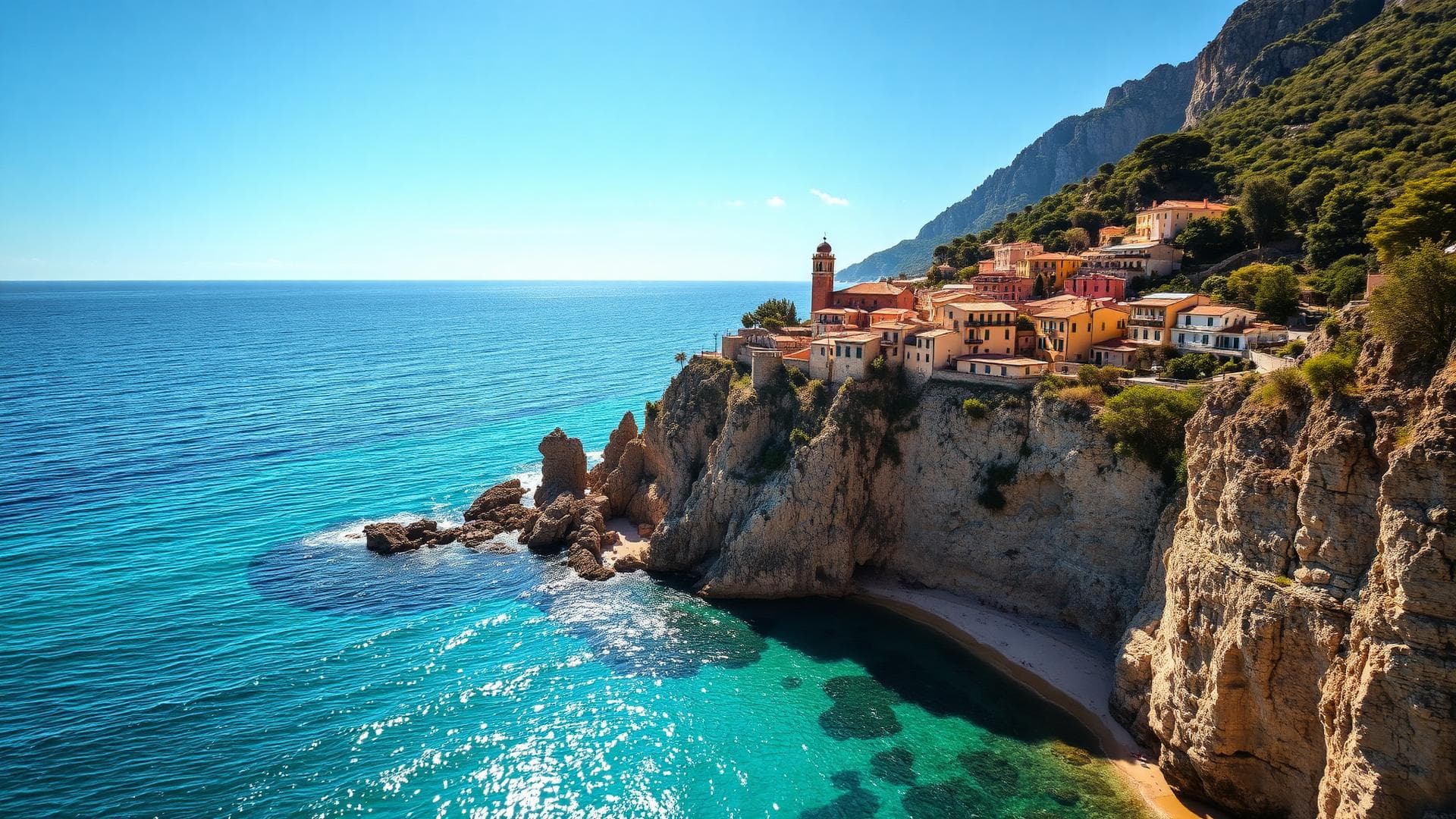
The Maremma coastline is Tuscany's best-kept secret, pristine beaches, dramatic cliffs, and charming harbour towns untouched by mass tourism. From the wild nature reserves of the Maremma to the chic island of Elba, this is where Italians come to holiday.
Quick Answer
The Tuscan Coast stretches from the Etruscan Riviera south through the wild Maremma to Monte Argentario. It offers a different kind of Italian holiday to the inland regions: long beaches, thermal springs, nature reserves, and medieval hilltop towns like Pitigliano and Sovana. Villa rentals here work particularly well for families combining sea and culture in a single trip.
The Maremma is the part of Tuscany that people who've been to Tuscany several times tend to eventually find their way to. Wilder, more sparsely populated, with a rougher coastal edge and a landscape that's less manicured than Chianti. The medieval hilltop towns here, Pitigliano, Sorano, Sovana, are among Tuscany's most dramatic, built on tufa rock outcrops above deep ravines.
The coastline between Grosseto and the Argentario peninsula is genuinely beautiful, with long beaches, clear water, and the island of Giglio visible on the horizon. The Alta Maremma nature reserve, butteri on horseback, wild horses, white Maremma cattle, gives the area a character entirely unlike the rest of Tuscany.
What to Expect in Tuscan Coast
Beaches & Coves
Discover hidden coves, sandy bays, and crystal-clear Mediterranean waters.
Nature Reserves
Parco della Maremma offers pristine hiking trails through coastal pine forests.
Seafood
Fresh catch served at harbour-side trattorias in Castiglione della Pescaia and Porto Ercole.
Island Hopping
Take a ferry to Elba, Giglio, or Giannutri for a day of unspoiled island life.
The Maremma: Tuscany's Wild South
The Maremma is what people who've visited Tuscany several times eventually find their way to. Less polished than Chianti, less photographed than the Val d'Orcia, and all the better for it. The towns, Pitigliano, Sorano, Sovana, Saturnia, feel like they haven't quite registered that the rest of Italy has discovered Tuscany. If your group includes people who want beach days alongside the Tuscan countryside, the Maremma is the only region that makes this straightforward.
It is also the region that suits guests who want large estate properties with more privacy than the well-developed north can offer. Villas here tend to sit on substantial land, with a sense of genuine isolation that's harder to find near Chianti.
The Hilltop Towns
The medieval towns of the southern Maremma are among Tuscany's most extraordinary and least visited. Pitigliano rises dramatically from a tufa cliff, earning its nickname 'Little Jerusalem' for the Jewish community that thrived here for centuries. Its Etruscan cave dwellings and ancient wine cellars carved into the rock make it one of Tuscany's most photogenic stops.
Sorano is Pitigliano's quieter neighbour, perched above a deep gorge and crowned by a massive Orsini fortress. The surrounding woods hide Etruscan tombs and vie cave, ancient pathways cut deep into the tufa rock, covered in moss and ferns. Sovana, the smallest of the three, has a Romanesque cathedral that's wildly disproportionate to the size of the village.
The Coastline
The Maremma coastline runs from the Parco della Maremma (the protected coastal reserve south of Grosseto) down to the Argentario peninsula, a long curve of beaches, dunes, and headlands that's popular with Italian families in summer but never reaches the density of the Riviera or Amalfi. The beaches at Capalbio and around Castiglione della Pescaia are the most accessible; the coves of the Monte Argentario peninsula are the most dramatic.
From Porto Santo Stefano and Porto Ercole, ferries run to the island of Giglio, a small, relatively unspoiled island with clear water and good walking. Elba is further north and larger, reachable from Piombino.
Key Towns in Tuscan Coast
Pitigliano
One of Tuscany's most dramatically sited towns, rising from a tufa cliff above the surrounding valleys. The 'Little Jerusalem' of Tuscany, with a historic Jewish quarter, Etruscan cave dwellings beneath the town, and extraordinary views. 2 hours from Florence; best reached by car.
Saturnia
Famous for its thermal waterfalls (cascate del Mulino), free natural hot springs that pour over pale travertine terraces. Open 24 hours, no admission charge. A surreal and genuinely wonderful place to spend an afternoon in any season. The spa hotel nearby offers more formal (and expensive) treatments.
Grosseto
The main town of the Maremma and the practical hub for the region. Functional rather than beautiful, but with a good market, useful supermarkets, and the best range of restaurants for a proper evening out. The medieval walls around the old town are worth a walk.
Castiglione della Pescaia
One of the Maremma coast's most attractive resort towns, a medieval village on a promontory above a long sandy beach. Good restaurants, an active harbour, and a distinctly Italian holiday atmosphere. Busy in August; very pleasant in June and September.
Practical Notes
Getting there
The Maremma is roughly 2-2.5 hours from Florence by car, and about 1.5 hours from Siena. It's furthest from the classic Tuscany itinerary, Florence, Siena, Chianti, which is part of its appeal, but means a Maremma base isn't the right choice if you want to cover those cities without long driving days. Pisa airport is the closest, at around 1.5 hours.
This is not a base for covering Tuscany
The Maremma means driving. Florence is 2.5 hours. This is not a base for guests whose priority is seeing the region's greatest hits, it's a base for people who have already done them, or who specifically want the Maremma's combination of beach, wild landscape, and extraordinary towns. For that audience, it's unbeatable.
Frequently Asked Questions
It depends on your priorities. If you want Florence, Siena, and the classic Chianti landscape, the Maremma is a long drive from all of them and isn't the right base. If you've done those things on a previous trip or if beaches, wild landscape, and the extraordinary tufa towns are your main interest, then the Maremma is excellent, and considerably less busy than the north.
Yes. The Maremma coast has some of the cleanest water in Tuscany, with the Parco della Maremma providing protected beaches accessible only on foot or by shuttle bus. The beaches around Castiglione della Pescaia are family-friendly and well-equipped; the Monte Argentario peninsula has more dramatic, less organised coves. July and August are busy; June and September are significantly calmer.
Yes, but plan for longer drives. Siena is a 1.5-hour round trip, very doable as a day out. Florence is better as an overnight or early-start day trip rather than an evening excursion. The Val d'Orcia towns (Pienza, Montalcino, Montepulciano) are 1-1.5 hours from most Maremma villas and make a natural loop itinerary.