The Best Areas to Rent a Villa in Tuscany and How to Choose
Choosing where to base yourself in Tuscany is the decision that shapes everything else about your holiday. Get it right and the days flow effortlessly, morning coffee on a hilltop terrace, a different medieval town every afternoon, a wine estate ten minutes up the road. Get it wrong and you spend half your trip in the car wondering why the villa in the brochure looked so central.
Tuscany is bigger than most people expect. The best areas to rent a villa, Chianti, Val d'Orcia, the Lucchesia, Maremma, and Cortona's Valdichiana, each have a completely different character, different road conditions, different proximity to the sights you probably came to see, and different answers to the question of who actually enjoys them most.
How to choose a Tuscany villa region
Before diving into the regions, it helps to be honest about a few things. How mobile do you want to be? A car is essential almost everywhere in Tuscany, but some bases involve a lot more driving than others. Views or village access? The most dramatic landscapes often come with slower white roads that aren't fun in a low-slung hire car. Wine or coast or culture? Chianti is unbeatable for wine estates. Maremma adds beaches. Lucca gives you a city. Val d'Orcia specialises in atmosphere and UNESCO scenery.
Chianti
Best for: Wine lovers, repeat visitors, anyone who wants to feel rooted in one corner of Tuscany rather than covering distance.
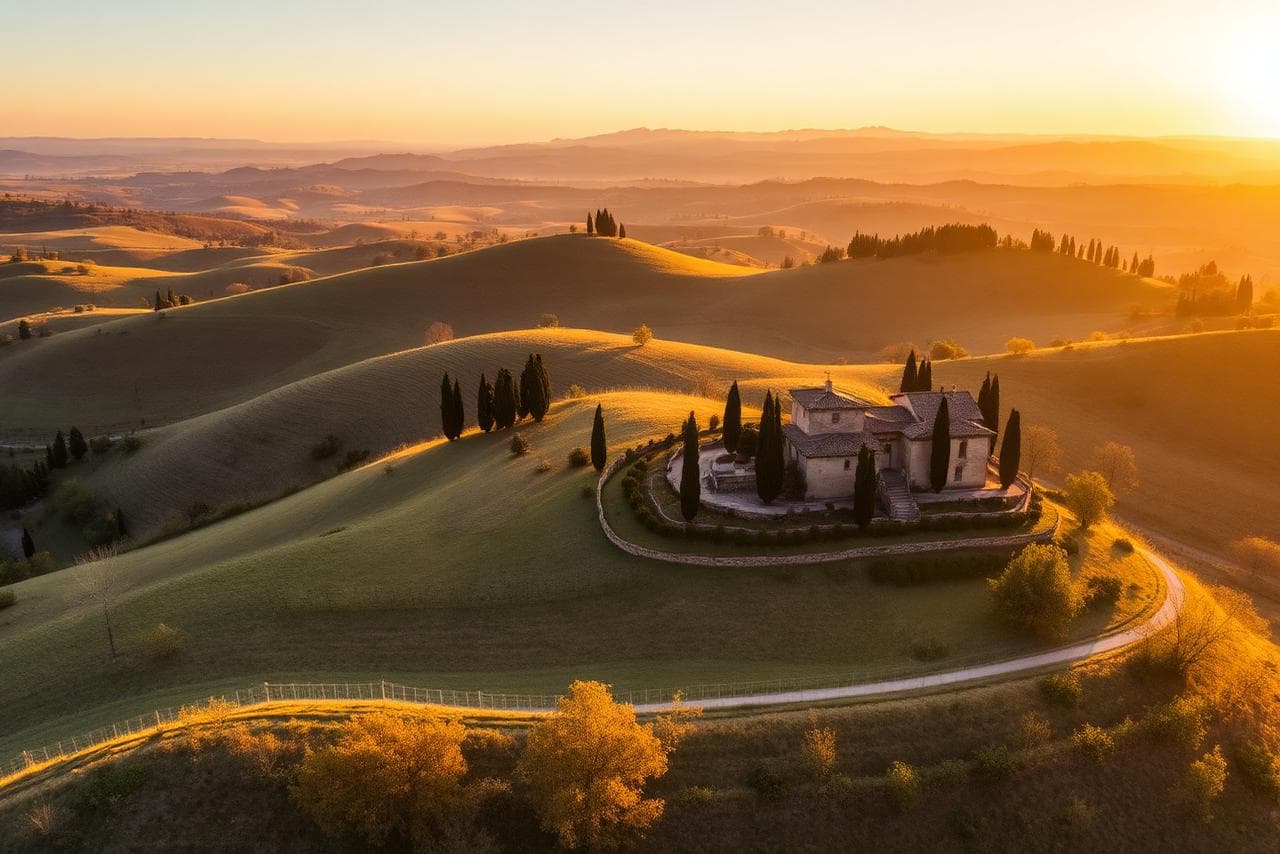
Chianti is the heartland. If you close your eyes and picture Tuscany, vine-covered hillsides, stone farmhouses, cypress trees marking the approach to an estate, you're probably picturing Chianti. The Strada del Vino runs through it, connecting Greve in Chianti, Panzano, Radda, and Gaiole, each a proper village with a butcher, a baker, and a wine shop that stays open until eight.
Distances here work in your favour. Siena is 30-40 minutes from the southern Chianti villages. Florence is 45 minutes from the north. You can realistically do both in a week without the drives feeling like a burden. Villas in Chianti tend to sit within wine estates, which means you often have the option of buying the producer's bottles directly.
Watch out for: Chianti's popularity is its main drawback. In July and August, the villages fill up. Many villas are also set back from the road on unpaved tracks, charming in dry weather, an adventure after rain.
Val d'Orcia
Best for: First-timers who have come for the classic Tuscany postcard and couples and photographers who want space, drama, and silence.
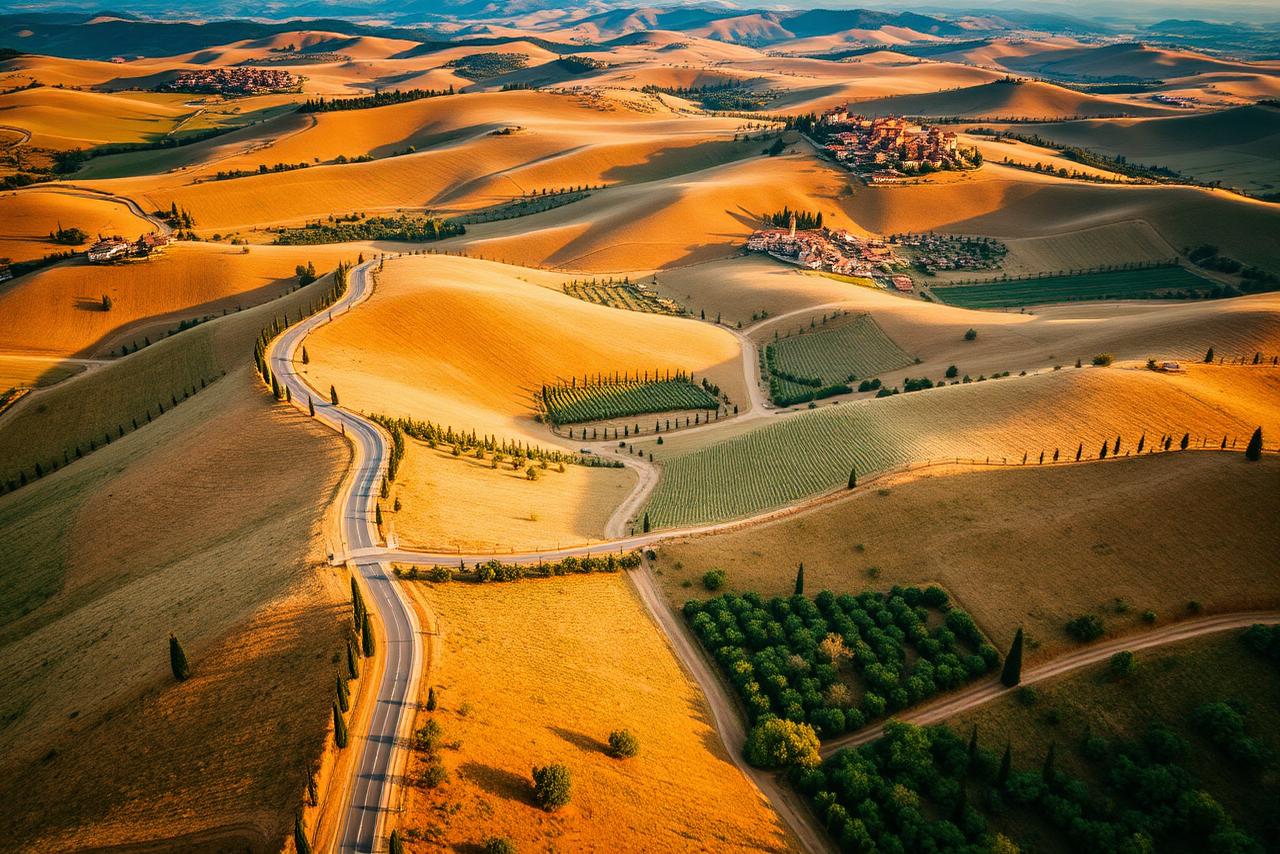
If Chianti is Tuscany's workhorse, Val d'Orcia is its showpiece. The UNESCO-listed landscape south of Siena, those extraordinary rolling clay hills, the lines of cypress marking old pilgrimage roads, the hilltop town of Pienza perched above it all, is genuinely unlike anywhere else in Europe.
The region's anchor towns each offer something distinct. Montalcino produces Brunello, one of Italy's greatest red wines. Montepulciano is more animated, a genuine hill town with a living community. Pienza is tiny, perfect, and best visited on a Tuesday morning before the coaches arrive. Bagno Vignoni, a village built around a Renaissance thermal pool rather than a square, is one of the stranger and more wonderful places in all of Tuscany.
Watch out for: Remoteness is Val d'Orcia's greatest asset and its most significant practical challenge. Many villas are 20-30 minutes from the nearest town on white gravel roads. August temperatures regularly hit 37-38°C. Without a pool this becomes difficult, book the pool villa.
Lucca & the Lucchesia
Best for: Families with children, first-time visitors who want a walkable city on hand, and anyone who finds deep countryside isolation more stressful than relaxing.
Lucca is one of Tuscany's most underrated cities, small enough to feel manageable, with intact Renaissance walls that have been turned into a tree-lined promenade where locals cycle and picnic every evening. The countryside around Lucca, the Lucchesia, is gentler than Chianti. Rounded olive-covered hills rather than dramatic vineyard terraces.
Distances from Lucca to Pisa are around 30 minutes; the Versilia coast is 40 minutes. The Cinque Terre is doable as a day trip. If your group wants variety, beach days, city days, hill town days, the Lucchesia gives you more of it within easy reach than anywhere else in the region. It is also the most practical base for families.
Watch out for: The Lucchesia doesn't have Chianti's wine credentials or Val d'Orcia's visual drama. Villa density around Lucca is also high, read listings critically and check satellite view for genuine seclusion.
Maremma
Best for: Escapists, nature lovers, and travellers who want Tuscany without the tourist circuits and don't mind a longer drive to the classics.
Maremma is Tuscany's wild south, less polished than Chianti, less photographed than Val d'Orcia, and all the better for it. The towns, Pitigliano, Sorano, Sovana, Saturnia, feel like they haven't quite registered that the rest of Italy has discovered Tuscany. If your group includes people who want beach days alongside the Tuscan countryside, Maremma is the only region that makes this straightforward.
Watch out for: Maremma means driving. Florence is 2.5 hours. Siena is 1.5 hours. This is not a base for covering Tuscany's greatest hits, it's a base for the people who have already done them and want something quieter.
Cortona & the Valdichiana
Best for: Couples who want a single hilltop town as their anchor, and travellers with a preference for slow travel over covering ground.
Cortona sits on a steep hillside above the broad flat Valdichiana valley, one of the few genuinely vertical Tuscan towns. Lake Trasimeno is 20 minutes away. Montepulciano is 45 minutes. Arezzo, an underrated city with one of Italy's finest antiques markets, is 30 minutes. Umbria's Orvieto is an easy half-day from here.
Watch out for: The approach roads to Cortona are steep and the town's streets are not designed for cars. Villa access often means negotiating narrow switchbacks.
Which region is right for you?
If you're still weighing it up, the honest advice is this: don't let the choice paralyse you. Every area in this guide has genuinely wonderful villas. The region matters less than the specific property, the time of year, and the people you're going with. Pick the area that fits your travel style and then choose the villa carefully and the rest tends to look after itself.
Ready to start planning? Browse our destinations or get in touch, our team knows every corner of Tuscany and Umbria.