Tuscany Weather Guide: Month-by-Month, Regions & When to Visit
Tuscany has a Mediterranean climate with a pronounced seasonal character, hot dry summers, mild wet winters, and two forgiving shoulder seasons in late spring and early autumn where the weather does most of its best work. For villa travellers, the usable season runs from late April through mid-October, with pool-centric holidays concentrated between June and September. The rest of the region rewards visitors who come for the food, the wine, the quieter towns, and the different winter light.
This guide covers Tuscany weather month by month, the regional microclimates that matter when choosing a villa base (inland Chianti is not the same as coastal Maremma, and the Val d'Orcia's altitude changes everything; see Tuscany's distinct sub-regions for the full geographic picture), a closer look at Florence's notoriously hot summer city microclimate, and an honest answer to the most-asked question of all: when is the best time to visit Tuscany?
What Is the Weather Like in Tuscany?
Tuscany has a Mediterranean climate that is warm and dry between May and September, with winter rainfall concentrated between November and March. Average summer highs in central Tuscany sit at 28-32°C in July and August; average winter lows hover at 2-5°C in January. Annual rainfall is roughly 750-900mm, most of it falling outside the tourist season. Spring and autumn are mild (highs of 18-25°C), with strong sunshine and cool evenings.
Regional variation matters, more than most published guides acknowledge. Coastal areas in the Maremma stay a degree or two warmer in winter and windier in summer; the Val d'Orcia and Crete Senesi sit at higher elevation and can run 2-3°C cooler than Florence in summer and frosty in winter; Florence itself, in a basin surrounded by hills, concentrates summer heat in a way the surrounding countryside does not.
For villa-holiday purposes, the season turns on pool usability: without pool heating, most villa pools are genuinely pleasant from late May through late September, with June and September the sweet spots for swimming without paying peak-season pricing.
Tuscany Weather at a Glance
Tuscany weather at a glance
| Month | Avg High | Avg Low | Rainfall | Sea Temp | Pool Usable? | Crowds |
|---|---|---|---|---|---|---|
| January | 9°C | 2°C | 75mm | 13°C | No (unheated) | Very low |
| February | 11°C | 3°C | 65mm | 13°C | No | Very low |
| March | 14°C | 5°C | 70mm | 14°C | No | Low |
| April | 18°C | 8°C | 70mm | 15°C | With heating | Low-moderate |
| May | 23°C | 12°C | 65mm | 18°C | Yes (warm days) | Moderate |
| June | 28°C | 16°C | 45mm | 22°C | Yes | Moderate-high |
| July | 32°C | 19°C | 20mm | 24°C | Yes | Peak |
| August | 32°C | 20°C | 25mm | 26°C | Yes | Peak |
| September | 27°C | 16°C | 65mm | 24°C | Yes | Moderate |
| October | 20°C | 12°C | 100mm | 21°C | With heating | Low-moderate |
| November | 14°C | 7°C | 110mm | 18°C | No | Low |
| December | 9°C | 3°C | 85mm | 15°C | No | Very low |
Temperatures above are averages for inland central Tuscany (Florence/Siena area). Coastal Maremma runs 1-2°C warmer in summer; high-altitude Val d'Orcia and Garfagnana 2-3°C cooler.
Rainfall is concentrated in October and November (the wettest months, averaging 100mm+) and again in March. July and August are reliably dry; 15-25mm across the whole month is typical, often arriving in a single dramatic thunderstorm.
Spring in Tuscany (March-May)
March
The first month when Tuscany starts to feel genuinely inviting rather than merely dormant. Almond blossom arrives, wild flowers dot the hillsides, and the winter rains have the countryside intensely green. The region is essentially empty of visitors. Temperatures are still cool enough that a jacket is advisable for evenings, and pools are not usable without heating. But for walking, cycling, driving the scenic routes and getting unhurried access to Florence's galleries and Siena's piazzas, March makes a strong case.
Expect: highs 13-15°C, lows 4-6°C, 70-80mm rainfall. Daylight 11-12 hours.
April
April is when most people start seriously considering Tuscany. Temperatures climb toward the mid-teens by mid-month, warm afternoons make heated-pool use enjoyable, and the landscape reaches peak green before the summer heat bleaches the hills to gold. Easter week is the exception, major towns and tourist sites are busy, accommodation fills early, and restaurants in Florence and Siena take bookings weeks ahead. Outside Easter, April is quietly excellent.
Expect: highs 17-19°C, lows 7-9°C, 60-75mm rainfall. Daylight 13 hours.
May
Arguably the best single month in Tuscany for anyone able to travel outside school holidays. Temperatures settle in the low-to-mid twenties, the weather dries out, evenings are long, and pool temperatures begin to reach comfortable levels without artificial help. The countryside is full of wild flowers and olive trees are in new leaf. Accommodation demand is firm but not absurd; the main attractions can be visited without the crush of high summer. If you have flexibility on dates and haven't yet discovered May in Tuscany, discover it.
Expect: highs 22-24°C, lows 11-13°C, 60-70mm rainfall. Daylight 14.5 hours.
Summer in Tuscany (June-August)
June
The start of the villa season proper. June is warm enough for extended pool use, evenings are long and pleasantly warm, and the late-afternoon light does the things that make people book before they've finished reading the article. The first two weeks of June are notably calmer than July and August, Italian schools are still in session and international visitors haven't peaked. The second half of the month sees a noticeable increase in density at the major hilltop towns. Pool temperatures reach genuinely comfortable levels (22-24°C) by mid-month.
Expect: highs 27-29°C, lows 15-17°C, 40-50mm rainfall. Daylight 15+ hours.
July and August
Peak summer. Inland Tuscany regularly reaches 32-35°C in the afternoon, and occasional heatwaves push toward 38°C. This is the season around which the villa is built: the pool becomes the gravitational centre of the day, shutters stay closed until the heat breaks in the evening, and dinner on the terrace at 9pm is the natural culmination. Tuscany in high summer is wonderful, but also at its most expensive, most booked and most crowded. Major hilltop towns, Montepulciano, Pienza, San Gimignano, are genuinely busy with day-trippers; arrive early and leave before midday.
If you're travelling in July or August, book as early as possible; good properties at competitive prices fill six to twelve months out. Plan days around the heat, not against it: early-morning excursions, a slow lunch, the pool from early afternoon, late activity once the day cools. Air conditioning at night is useful in July and essential in most of August.
Expect: highs 31-33°C, lows 18-20°C, 15-25mm rainfall. Daylight 14.5 hours in July, 13.5 in August.
Autumn in Tuscany (September-October)
September
For a large number of Tuscany regulars, September is the best month of all. Temperatures moderate to the upper twenties, crowds thin noticeably after the first weekend (when Italian schools return), and the landscape begins its shift from summer gold to autumn rust. The vendemmia, grape harvest, happens across Tuscany through September, and a good number of estates open their vineyards for harvest visits. Pool temperatures remain very comfortable without heating right through the month.
Expect: highs 26-28°C, lows 15-17°C, 60-70mm rainfall. Daylight 12.5 hours.
October
October's first half is often glorious: warm enough for lunch outside, cool enough for walking, the landscape amber and gold, and the olive harvest underway. The light in October is markedly different from summer, lower, softer, with longer shadows and it's the month landscape photographers quietly choose. The second half of October sees increased rainfall and cooler temperatures, particularly at higher altitude. Pool use by the last week generally requires heating, and some smaller restaurants and countryside B&Bs begin their winter closure.
Expect: highs 19-21°C, lows 11-13°C, 90-110mm rainfall. Daylight 11 hours.
Winter in Tuscany (November-February)
Tuscany in winter is understated but genuinely rewarding for the right visitor. Accommodation is substantially cheaper, often 40-60% less than summer rates and the main towns are returned to their inhabitants. Restaurants that feel like tourist establishments in July show a different character in November. The landscape, stripped of its summer foliage, shows its underlying architecture in a way that is quietly beautiful.
The practical constraints are real. The villa pool is not viable without heating, and even heated the ambient temperature makes swimwear uncomfortable. Many smaller accommodation options close entirely. Some areas, particularly the Val d'Orcia and the deeper Maremma, feel very remote. And while the weather is mild by British standards, November and December carry regular rain, and January and February occasional frost at altitude. Light snow is uncommon but not unheard of, particularly in the Garfagnana and at the top of the Casentino hills.
Winter suits: visitors who want Tuscany without the villa-holiday infrastructure; couples on shorter breaks focused on food and wine; off-season itineraries (truffle hunting in San Miniato, olive oil production in Chianti, Carnival in Viareggio in February).
Expect (January, the coldest month): highs 9-11°C, lows 2-4°C, 60-80mm rainfall.
Regional Weather Variations Across Tuscany
Published "Tuscany weather" figures almost always describe central Tuscany around Florence and Siena. In practice, the region spans coastal Maremma to the foothills of the Apennines, and the microclimates differ enough to matter when choosing a villa base. See our map of Tuscany for orientation on how these areas sit relative to each other.
Chianti (between Florence and Siena)
The classic central-Tuscany profile: hot dry summers, mild damp winters, 800-850mm annual rainfall. Villas on south-facing slopes between 250-450m catch good afternoon breezes and stay a degree or two cooler than the Florence basin. Nights cool reliably even in high summer, which most visitors appreciate.
> Planning a Chianti villa holiday? May, June, and September are the strongest months — warm but rarely uncomfortable, with daylight long enough for late dinners. Browse our Chianti villa rentals for those dates.
Val d'Orcia and Crete Senesi (southern central)
Elevation changes the experience. Much of the Val d'Orcia villa stock sits between 400-700m; Montepulciano itself is 605m. Summer daytime temperatures track inland central Tuscany, but evenings are 2-4°C cooler, a cardigan for al fresco dinners in July is not unusual. Winters are notably colder, with frost common in January and occasional light snow. Spring arrives two to three weeks later than in Chianti.
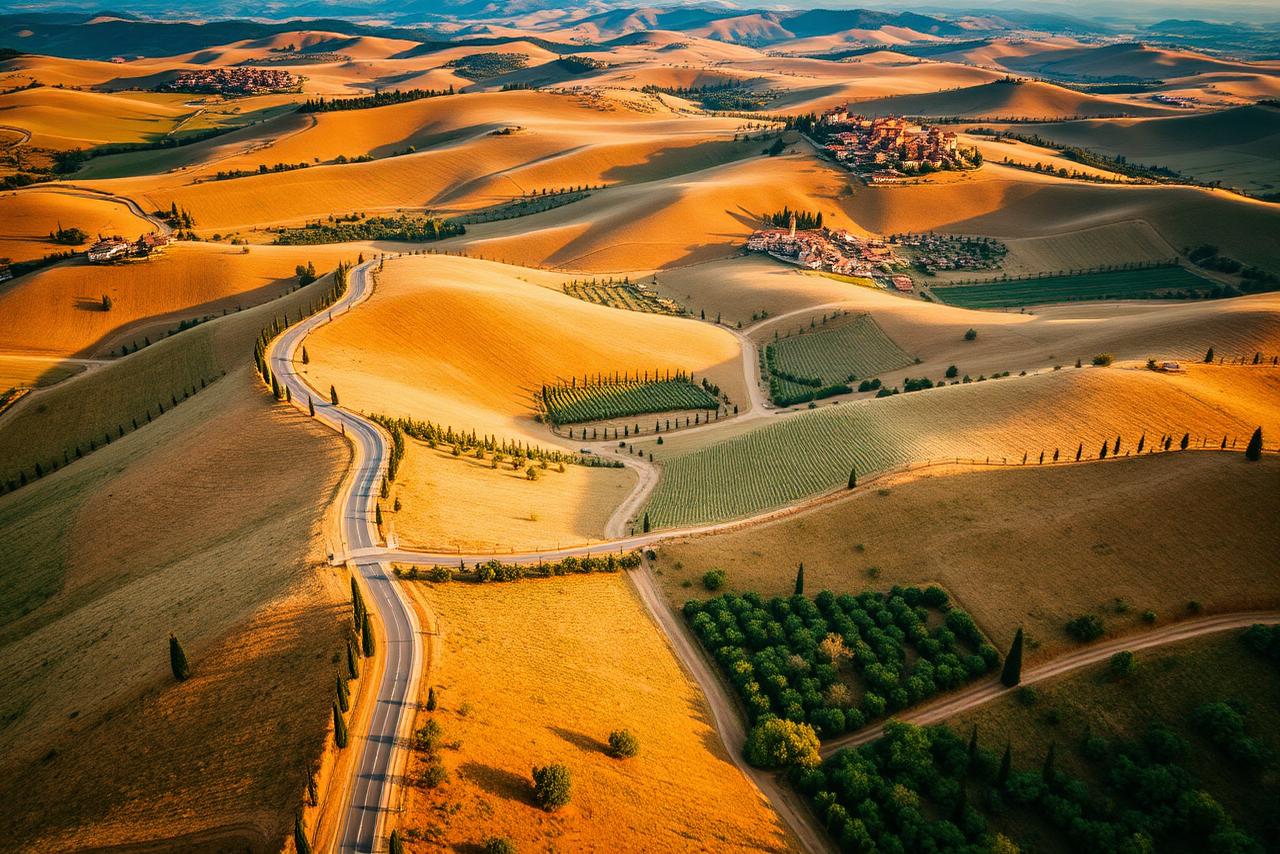
> Planning a Val d'Orcia villa holiday? October is the photographer's month down here — soft light, harvest colour, daytime highs in the high teens. May is the quieter alternative. See our Val d'Orcia villa rentals.
Tuscan Coast and Maremma (west and south-west)
Maritime influence moderates the extremes. Summer highs are very slightly lower than inland (30-32°C vs 32-35°C), winter lows are milder, and sea breezes make afternoon heat more tolerable. Rainfall is lower (600-750mm annually). Sea temperatures are swimmable from mid-June through early October, peaking at 25-26°C in August. Humidity is higher than inland, which matters for British visitors sensitive to muggy evenings.
> Planning a coast villa holiday? Beach season runs late May to mid-September; the shoulder weeks at either end are warmer than inland Tuscany and noticeably less busy. Browse Tuscan Coast and Maremma villas.
Lucca and the Garfagnana (north-west)
Greener, wetter and cooler than central Tuscany. Lucca itself sits on a plain at 20m elevation but the Serchio Valley climbs rapidly into the Apuan Alps, where summer nights can be distinctly cool and winter snow is routine. Annual rainfall in the Garfagnana can exceed 1,500mm, nearly double central Tuscany. For villa guests, this is the area to choose in mid-summer if the idea of 35°C and a wrung-out landscape is not the holiday you are looking for.
> Planning a villa near Lucca? The Lucca side runs slightly cooler than central Tuscany — useful in July and August when the inland hills hit 35°C. Browse villas near Lucca.
Florence basin (the city microclimate)
Florence sits in a natural basin surrounded by hills, and the topography concentrates summer heat. City afternoon temperatures in July and August commonly reach 36-38°C, and the stone-and-concrete urban environment releases heat slowly overnight. Humidity is moderate but perceptually high. The practical implication for villa guests: day trips to Florence in July and August should finish by midday. The city is genuinely delightful in May, early June, September, and October, when temperatures are manageable and the galleries are at something approaching their best. For visitors planning to spend most of their week in the Florence basin, the practical villa-rental answer is a Chianti property within 45 minutes of the city — see villas near Florence.
Florence Weather: Month-by-Month for City Breaks
Florence attracts its own weather searches, not least because its climate is meaningfully different from the surrounding countryside. For villa guests planning city day trips, and for anyone considering a Florence-only short break, here is the monthly breakdown.
Florence weather month by month
| Month | High | Low | Notes |
|---|---|---|---|
| January | 10°C | 2°C | Damp, short days. Galleries pleasantly uncrowded. |
| February | 12°C | 3°C | Wintry but noticeably longer light by month-end. |
| March | 16°C | 6°C | Occasional crisp clear days; first comfortable walking weather. |
| April | 19°C | 9°C | One of Florence's best months. Book around Easter. |
| May | 24°C | 13°C | Warm enough for outdoor dining, cool enough for full days on foot. |
| June | 28°C | 17°C | Start of genuinely hot city weather; mornings still comfortable. |
| July | 33°C | 19°C | Hot and crowded. Morning-only itineraries recommended. |
| August | 33°C | 19°C | Peak heat; many locals leave for Ferragosto week. |
| September | 27°C | 16°C | Comfortable, with post-Ferragosto easing of crowds. |
| October | 21°C | 12°C | Reliably excellent for city breaks. Cafes reclaim the pavements. |
| November | 14°C | 8°C | Wet but quiet; occasional flooding after heavy Apennine rain. |
| December | 10°C | 3°C | Christmas markets in Piazza Santa Croce; otherwise subdued. |
Florence sits in a natural basin surrounded by hills that concentrates summer heat, afternoon temperatures typically run 2-4°C above the surrounding countryside in July and August.
The pattern to take away: Florence is reliably excellent in April-May and September-October, genuinely uncomfortable in July-August afternoons, and meaningfully cheaper and quieter in the winter months, a useful profile for food-and-art-focused short breaks.
Best Time to Visit Tuscany, by Priority
"The best month" depends on what the holiday is optimising for. The honest answer for British travellers:
Best time for a villa + pool holiday
June and September. Consistently warm, reliably dry, pools comfortable without heating, crowds materially below July/August. Mid-July and August give the hottest pool days but come with peak pricing and density.
Best time for wine tourism and the vendemmia
Second half of September and first half of October. The grape harvest brings vineyards alive, harvest dinners appear at agriturismi, and Chianti Classico estates host open days. Aim for a Chianti or Val d'Orcia base, see our best areas for villa stays guide.
Best time for cultural sightseeing (Florence, Siena, Lucca, Pisa)
May and October. Comfortable walking temperatures, open-sky days, and significantly shorter queues at the Uffizi, the Accademia and the Duomo than in July and August.
Best time for beach holidays on the Tuscan coast
Mid-June to mid-September. Sea temperatures peak at 25-26°C in August; the Tuscan coast is notably quieter than Liguria and markedly better value than Sardinia. Ferragosto (15 August) is the one week to avoid unless coastal crowds are part of the appeal.
Best time for walking, cycling and photography
Late April-May and late September-October. Ideal temperatures, long light, the landscape at its most photogenic, and the scenic strade bianche drivable without the dust cloud issues of high summer.
Best time for families with school-age children
Late June through August for pool-based family holidays (you will pay for it). Easter week or late October half-term for cultural and food-focused family breaks, with the caveat that pool use requires heating or a willingness to skip swimming.
Ready to Pick Your Month?
Whichever month works for your trip, our team can talk you through which regions are at their best then and which villas have availability. Browse all Tuscany villa rentals, tell us your dates for a tailored short-list within 24 hours, or read the month-by-month series for the specific month you're considering — May, June, September, or October.
What to Pack for Tuscany by Season
Spring (March-May)
Layers. Warm daytime temperatures sit alongside genuinely cool mornings and evenings, particularly at altitude. Bring a warm jumper, a light waterproof jacket, comfortable walking shoes, a sun hat and sunglasses. A swimsuit is optional until mid-May unless your villa has pool heating.
Summer (June-August)
Light cottons and linens, swimsuit, sun hat, strong sunblock (SPF 30+), sunglasses, a light wrap for 9pm restaurant terraces (once the sun drops, inland Tuscany cools noticeably). Comfortable walking shoes for the hilltop towns, cobbles and inclines make heels impractical. A small day pack for day trips. For Florence visits, a shoulder cover-up is necessary for entering the Duomo and other churches.
Autumn (September-October)
A mix that leans warmer in September and meaningfully cooler by late October. Include a proper jacket for late-October evenings, a light waterproof, layers, and a swimsuit through mid-September. Walking shoes with decent grip are worth having in October when rain makes the strade bianche slippery.
Winter (November-February)
A warm winter coat, scarf, hat and gloves for January and February. Waterproof shoes. An umbrella for November and December rain. The villa may require a few hours of heating to reach comfort on arrival, budget for it in the rental conversation.
Tuscany Weather vs UK Weather
British travellers often underestimate Tuscany's seasonality because "Mediterranean" suggests constant sunshine. A rough calibration for UK-based readers: summer Tuscany is noticeably hotter and drier than summer Britain, 30-35°C is routine, rainfall is negligible, and the heat is sustained through the afternoon in a way UK summers rarely manage. Autumn Tuscany (September) is often warmer and sunnier than UK August, the reason so many British villa guests return each September. Winter Tuscany is mild compared to most of the UK, Florence in January sits at 9/2°C, broadly similar to a damp London February without the Atlantic wind. Spring arrives two to four weeks earlier than in southern England; April in Chianti regularly feels like late May in Sussex.
Frequently Asked Questions About Tuscany Weather
What is the best time to visit Tuscany?
For most visitors, May, June, September or early October offer the strongest combination of warm weather, usable villa pools and manageable crowds. July and August are hotter and busier; winter is quieter and cheaper but not suited to pool-based holidays. See our decision guide on the best time to visit Tuscany for a fuller breakdown by activity (pool, wine, weddings, families) and by region.
What is the hottest month in Tuscany?
July and August tie as the hottest months, with average highs of 31-33°C in central Tuscany and 33-38°C in the Florence basin. Heatwaves above 38°C occur every few summers. Inland Chianti and the Florence basin run warmest; the Tuscan coast and higher Val d'Orcia are slightly more moderate.
What is the coldest month in Tuscany?
January is the coldest month, with average highs around 9°C and lows of 2°C. Frost is common at altitude; snow is rare in central Tuscany but occurs in the Val d'Orcia and Garfagnana most winters.
Does it rain a lot in Tuscany?
Tuscany receives 750-900mm of rain annually, similar to the UK but concentrated differently. Most rain falls between October and April; July and August are reliably dry. Summer showers, when they arrive, tend to be short and dramatic.
When can you swim in Tuscany?
Villa pools without heating are comfortable from late May through late September. Sea swimming on the Tuscan coast works from mid-June through early October, with the water peaking at 25-26°C in August.
Is Tuscany hotter than Rome?
Inland Tuscany is broadly similar to Rome in summer, slightly cooler on average by 1-2°C. Florence, with its basin microclimate, often matches or exceeds Rome's afternoon highs. The Tuscan coast is cooler than Rome by around 2°C in summer.
What is the weather like in Tuscany in September?
September averages 27°C highs and 16°C lows in central Tuscany, with low-to-moderate rainfall and very comfortable pool temperatures. Crowds thin after the first weekend. For many regular visitors, September is the best month of the year.
Is Florence hotter than the rest of Tuscany?
Yes, Florence's position in a natural basin concentrates summer heat, and city temperatures typically run 2-4°C above the surrounding countryside in July and August. For day trips in high summer, aim to be finished by midday.
Does it snow in Tuscany?
Light snow is not unusual at altitude (above 500m) in January and February, particularly in the Val d'Orcia, Crete Senesi and Garfagnana. Snow in central Florence and coastal areas is rare, a few times a decade.
What is the sea temperature on the Tuscan coast?
Sea temperatures climb from 15°C in April to 25-26°C in August, easing to 24°C in September and 21°C in October. Comfortable swimming season runs mid-June to early October.
Is Tuscany humid in summer?
Inland central Tuscany is notably less humid than coastal Italy or the Po Valley. Evenings cool reliably, which makes sleeping easier. The Tuscan coast and Maremma are more humid and sometimes feel muggier at night. Florence can feel humid in mid-August after successive heatwaves.
Can you visit Tuscany in winter?
Yes, Tuscany in December, January and February is quieter, cheaper and has a genuinely different character. Pool-based holidays do not work, but food-and-wine focused stays in Florence, Siena, Lucca or a Chianti agriturismo are excellent value. See our map of Tuscany for orientation on where to base yourself.
Plan Your Stay Around the Weather
Our team plans villa recommendations around travel dates, there's no point suggesting a property with an unheated pool in April if your priority is swimming, or a city-centre apartment in July if you want the full countryside experience. Get in touch with your preferred dates and we can help match you with somewhere that suits. You can also browse our full villa collection, filtered by region and pool type.
Tuscany Weather Month-by-Month: Detailed Guides
For the deeper monthly breakdown, including what's happening locally, what to pack, crowds, and pricing, see the dedicated month guides:
Tuscany in January - the year's quietest month: empty galleries, the Italian winter sales, deep off-season pricing.
Tuscany in February - Carnevale di Viareggio, the first almond blossom, and the last proper winter.
Tuscany in March - the spring transition, wildflowers and longer days; the year's first comfortable outdoor lunches.
Tuscany in April - reliable spring weather, Easter and the Scoppio del Carro, and the landscape at peak floral bloom.
Tuscany in May - the most-recommended single month: warm dry weather, long evenings, manageable crowds.
Tuscany in June - the start of villa season proper, with the first two weeks offering the strongest pricing-to-weather window of the year.
Tuscany in July - peak villa season, sustained heat, the Palio di Siena, and an honest guide to planning around the heat.
Tuscany in August - Ferragosto, peak crowds, the long Tuscan evening at its most pronounced, and how to plan around mid-month closures.
Tuscany in September - widely considered the best month: 27°C highs, comfortable pools, grape harvest, thinning crowds.
Tuscany in October - golden light, olive harvest, fewer visitors, the photographer's month.
Tuscany in November - the olive harvest, peak truffle season, and the year's quietest Florence galleries.
Tuscany in December - Christmas markets in Arezzo, Florence and Montepulciano, festive food traditions, and atmospheric off-season cities.