The Heart of Tuscan Wine Country
Chianti
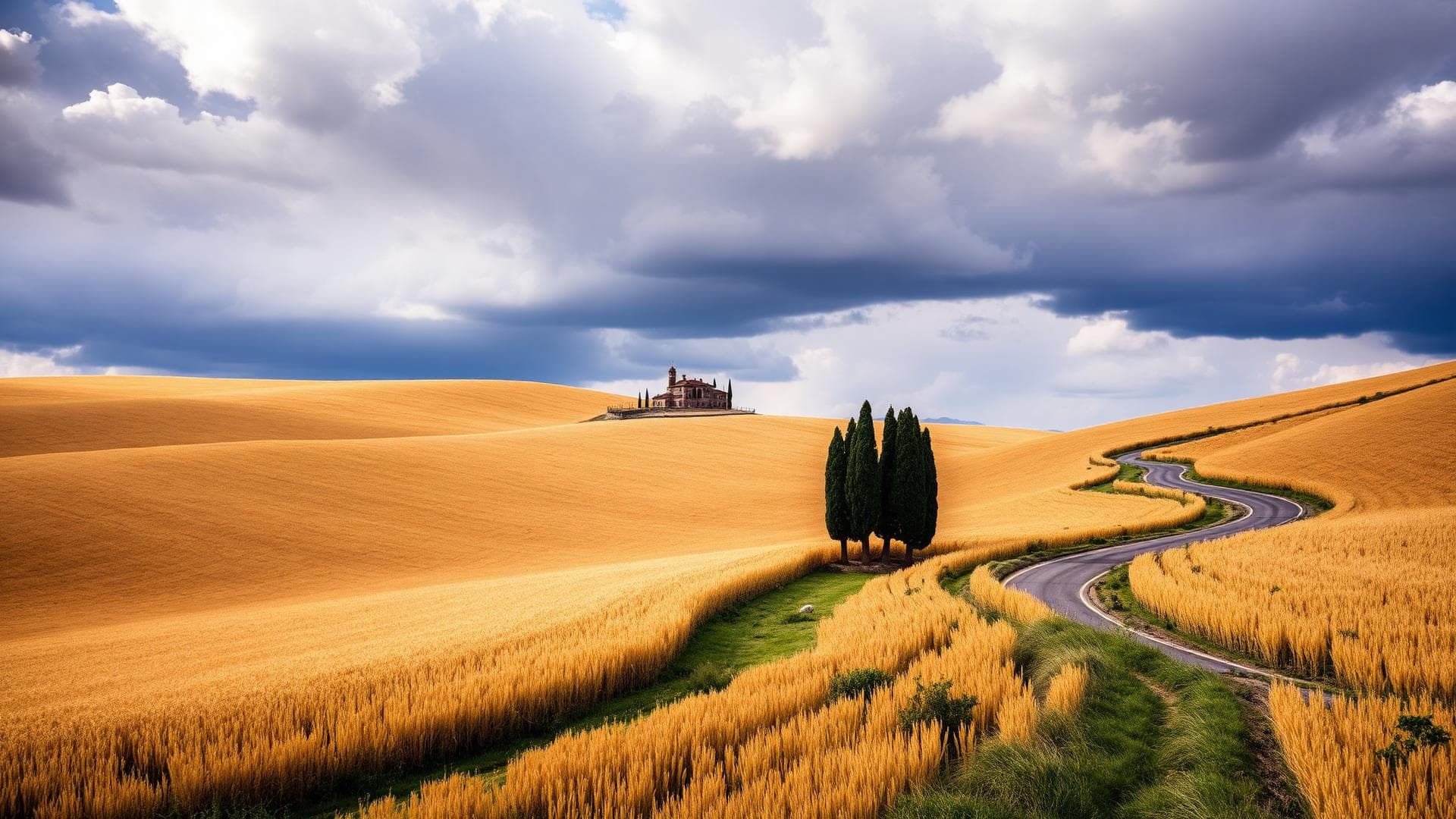
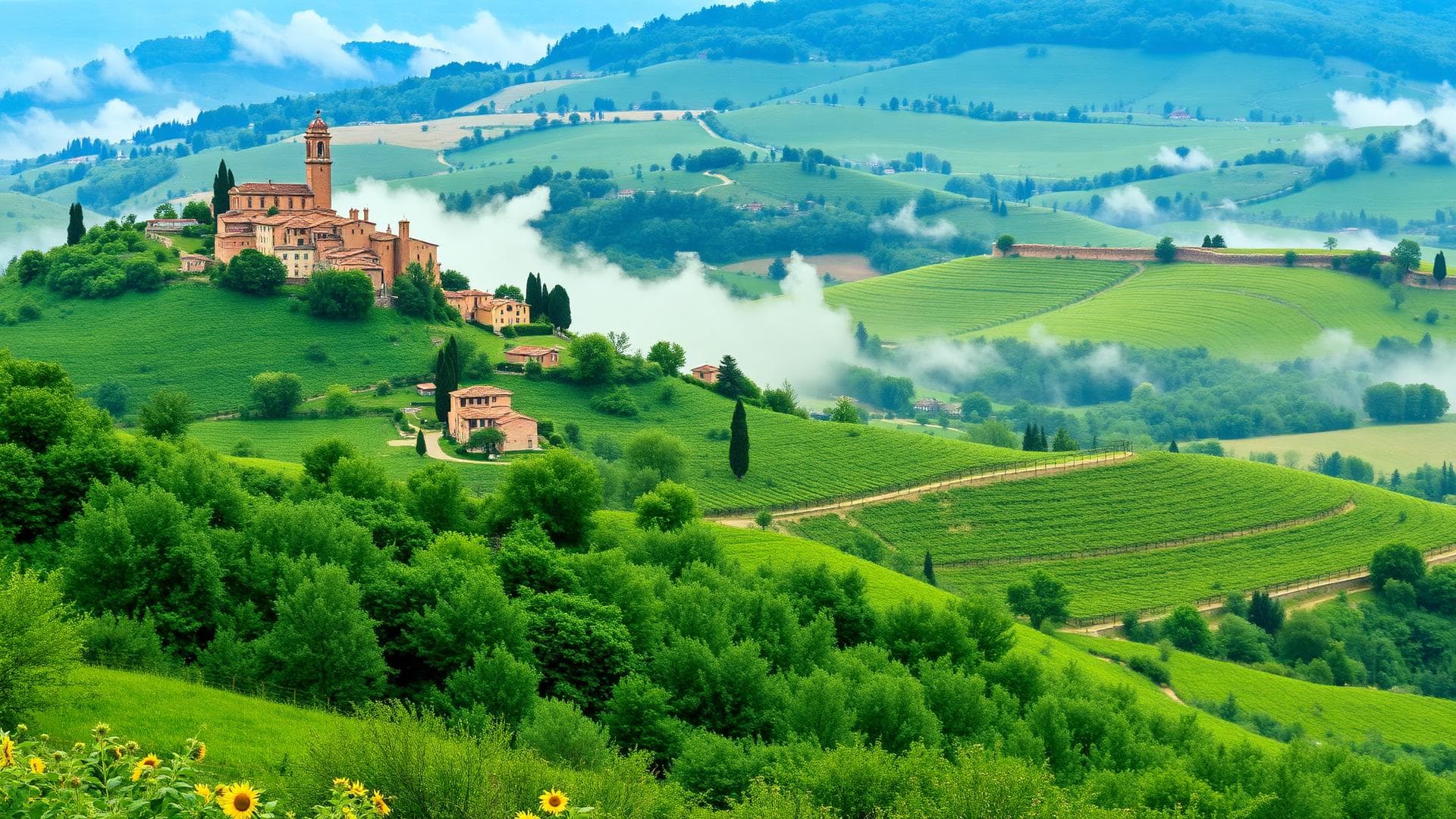
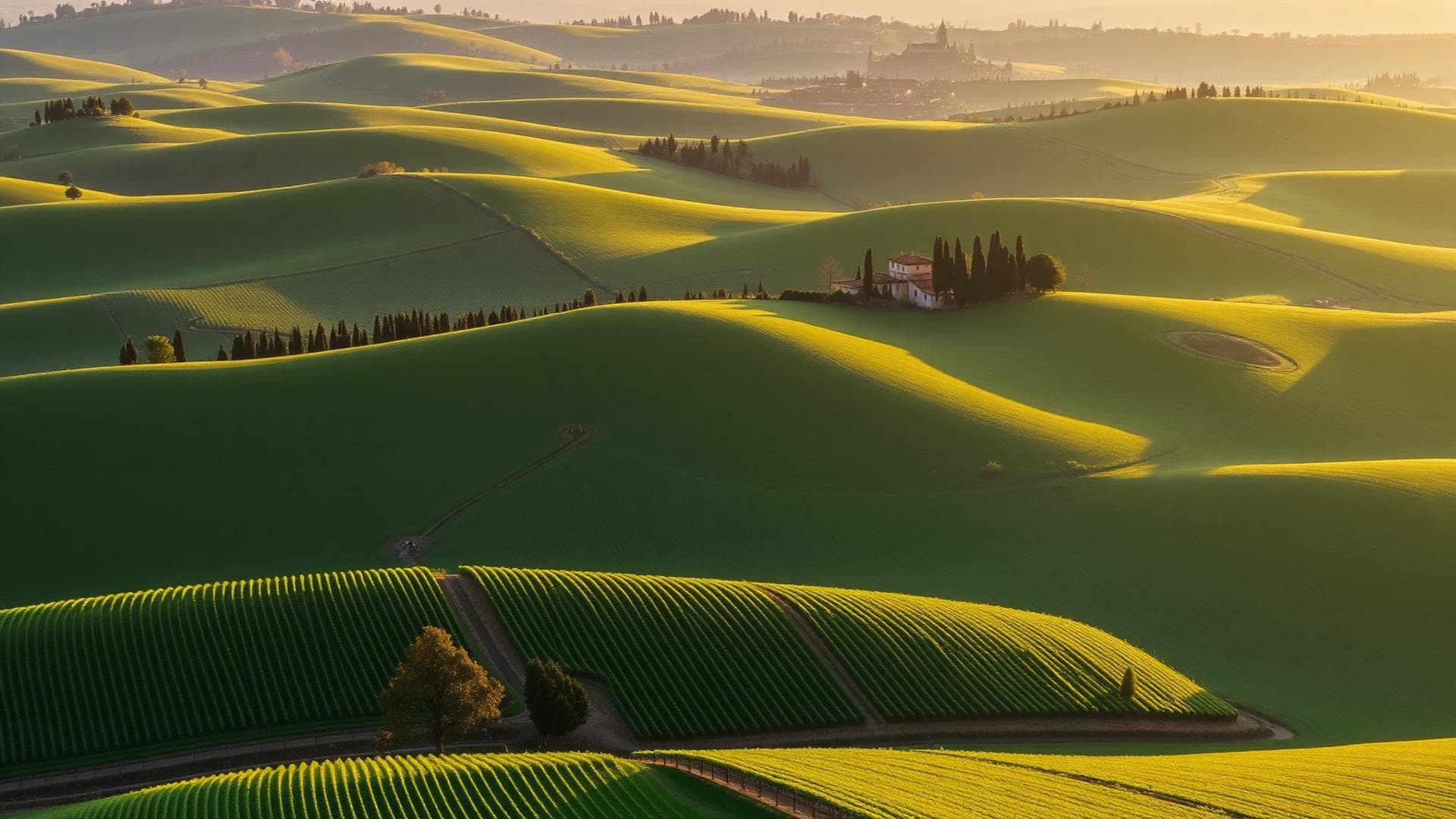
Rolling hills blanketed with vineyards, medieval stone villages, and winding cypress-lined roads, Chianti is the Tuscany of your imagination. This legendary wine region between Florence and Siena offers world-class Chianti Classico, farm-to-table dining, and some of the most beautiful countryside on earth.
Quick Answer
Chianti is Tuscany's most celebrated wine region, spread across rolling hills between Florence and Siena. For villa holidays, the Chianti Classico zone offers the highest concentration of beautifully converted stone farmhouses (case vacanza nel Chianti) with private pools, set among vineyards producing DOCG Chianti Classico. Most Chianti villas sit within 45 minutes of Florence airport.
Chianti gets all the attention and fairly so. It's the part of Tuscany that most closely matches what people picture when they picture Tuscany: vine-covered hills rolling south from Florence, hilltop villages with names that have been on wine labels for decades, long lunches that extend into the late afternoon without anyone suggesting it's time to leave. For villa holidays, it's consistently the most popular area we work with, and consistently the one guests return to.
The area does have trade-offs worth being clear about before you book. The most scenic roads, the Chiantigiana, the SP7 near Panzano, the winding approach to Radda, are also the ones that tour buses take between Florence and Siena. In July and August, parts of Chianti Classico can feel genuinely busy. The best Chianti villa holiday requires some knowledge of where to stay within the area, not just 'Chianti' as a broad pin on a map.
What to Expect in Chianti
Wine Tastings
Visit centuries-old cellars and taste Chianti Classico DOCG at boutique estates.
Farm-to-Table
Savour traditional Tuscan cuisine with ingredients sourced from local farms and gardens.
Medieval Villages
Explore Greve, Radda, and Castellina, stone hamlets frozen in time.
Scenic Drives
The SS222 'Chiantigiana' road is one of Italy's most photographed routes.
The Chianti Classico Zone
The term 'Chianti Classico' refers both to a wine denomination and to the original, historic heart of the Chianti region, a roughly diamond-shaped area between Florence and Siena, with Greve in Chianti as its northern hub and Castelnuovo Berardenga as its southern edge. This is the most recognisable part: the landscape that ends up on the covers of travel supplements, the densest concentration of wine estates, and the area most people mean when they say 'we're going to Chianti'.
The Chianti Classico zone also contains most of the villa rental stock. It's well connected by road, within 45-60 minutes of Florence and 30-40 minutes of Siena, and the infrastructure, restaurants, farm shops, local markets, is well developed. This is both its strength and, on crowded August days, its occasional weakness.
What a Chianti Villa Actually Looks Like
The classic Chianti property is a converted stone farmhouse, built in the 16th or 17th century from the local grey pietra serena sandstone, with thick walls that stay cool in summer, terracotta floors, wooden-beamed ceilings, and a terrace facing south or west toward the vineyards. These properties were working farm buildings that have been renovated, in most cases carefully, into villa rental stock.
The pool is almost always detached from the house, positioned to take advantage of views rather than for proximity to the kitchen. Infinity pools are more common in the Val d'Orcia where the terrain drops more dramatically; in Chianti, most pools are level or slightly raised, looking out across rolling hillsides.
Sizes range from intimate two-bedroom conversions of agricultural outbuildings to large estates that sleep 14 or more across multiple buildings. The middle of the range, a four to six-bedroom farmhouse with a generous pool terrace and views across vines, is the Chianti villa format that works well for groups of friends and multi-generational families alike.
Key Towns in Chianti
Greve in Chianti
The main town and practical hub of the Chianti Classico zone. The triangular Piazza Matteotti has a character unlike any other Italian market square, lined with arcaded shops on all three sides, with a statue of Giovanni da Verrazzano at one end. Good range of restaurants and wine shops, a butcher's (Falorni) that's been there since the early 1800s, and a weekly farmers' market on Saturday mornings. Greve is 30km south of Florence on the Chiantigiana.
Panzano in Chianti
Smaller and quieter than Greve, and often considered by those who know Chianti well to be one of its most atmospheric villages. The village sits on a ridge between two valleys, with views across vineyards in both directions. The Conca d'Oro, the 'golden bowl' of south-facing slopes below the village, produces some of the finest wines in the denomination. Dario Cecchini's butcher's shop on the main street has become something of a pilgrimage destination.
Radda in Chianti
The medieval capital of the Chianti League, the 13th-century alliance of Florentine towns that originally gave the area its identity. Radda is smaller and quieter than Greve, sits at a slightly higher elevation (around 530m above sea level), and tends to be a few degrees cooler in the height of summer. The surrounding countryside is less manicured than the Greve area and, for that reason, slightly more atmospheric. A good base for guests who want more peace than the northern end of Chianti offers.
Gaiole in Chianti
Further south and slightly off the main tourist route, Gaiole is a working agricultural village rather than a tourist centre. The surrounding estates include some of Chianti Classico's most prestigious names, Badia a Coltibuono, Brolio castle and the Ricasoli estate. Guests who want to be genuinely in the countryside rather than near convenient infrastructure tend to find Gaiole a better anchor than the busier north.
Castelnuovo Berardenga
The southernmost zone of Chianti Classico, and a useful option for guests who want Chianti wine country but also want to be close to Siena. The landscape here transitions gradually toward the Crete Senesi, the pale clay hills that begin just south of Siena and the character is slightly different: more open, a bit quieter, and arguably less photographed. Depending on your priorities, that may be exactly what you want.
Choosing the Right Part of Chianti
Chianti is not one place, the character changes noticeably depending on where you base yourself. Use this table to narrow it down.
| Area | Best For | To Florence | To Siena |
|---|---|---|---|
| Near Greve | Easy Florence access, wine infrastructure, families | 35-40 min | 40-45 min |
| Near Panzano | Wine focus, scenic countryside, restaurants | 40-50 min | 40-50 min |
| Near Radda | Quieter, higher altitude, less tourist density | 50-60 min | 30-40 min |
| Near Gaiole | Estate wine tourism, working agricultural area | 55-70 min | 30-40 min |
| Near Castelnuovo | Close to Siena, transition to Crete Senesi | 60-70 min | 20-25 min |
Practical Notes
The roads
The Chiantigiana (SS222) is a beautiful drive but a slow one, it's single-carriageway for most of its length, with switchbacks, occasional passing places, and regular cyclists in season. Allow more time than the sat nav suggests, particularly with luggage or when arriving after a long flight. The autostrada (A1) runs parallel to the east and is faster when you're not in the mood for scenic. Most Chianti villas will also require some kilometres of white gravel road (strada bianca) to reach the property itself, entirely standard, but worth knowing if you've reserved a small city car.
The wine and food
Chianti Classico DOCG is the wine you're surrounded by, and the opportunity to visit the estates that produce it, often including private tastings and tours, is one of the more distinctive aspects of the area. A number of estates offer cellar door sales and tastings without booking; others have created agriturismo operations around their properties. If wine tourism is a priority, the Chianti area is unequalled in Tuscany for density and quality of options. The local food is equally exceptional: bistecca alla Fiorentina, ribollita, cinta senese pork, and the freshest pecorino from the Thursday market in Greve. See our guide to [Tuscan food and cuisine](/blog/best-tuscan-foods) for what to eat, cook, and bring home.
The heat in summer
Chianti sits at elevation (Radda is around 530m, Greve around 320m) which moderates the summer heat slightly compared to the valley floors. But July and August in Chianti are still hot, temperatures regularly reach 32°C, and the middle of the day is best spent at the pool rather than walking around a hilltop town. The flip side: evenings are reliably pleasant, and the villages come to life after 6pm in a way that feels very properly Italian.
Frequently Asked Questions
For many guests, yes, particularly first-time visitors. The combination of accessibility (45-60 minutes from Florence airport), landscape quality, wine country infrastructure, and range of villa stock is hard to match. Whether it's the best area for you depends on your priorities; if remoteness and dramatic scenery are the main event, the [Val d'Orcia](/destinations/val-dorcia) may suit better. If easy access to multiple cities and good day-trip options matters most, Chianti is the logical base.
The northern edge of Chianti Classico (just south of the Florence city boundary) is around 20 minutes by car. Greve in Chianti, the main town, is 30-35 minutes. Properties further south, near Radda or Gaiole, are 45-60 minutes from Florence. The Chiantigiana road is the scenic route; the autostrada is faster for airport runs.
Yes. There's no meaningful public transport to Chianti villas, and the area is entirely rural. You'll want a car from the airport for the transfer and for getting around during your stay. Driving in Chianti is genuinely enjoyable, the roads between estates and villages are one of the pleasures of the area, but you should be comfortable on narrow country roads, including some unpaved sections to reach the property itself.
May, June, and September are the sweet spots: warm enough for the pool, not unbearably hot, manageable crowds, and the landscape at its most photogenic. The grape harvest in September is a particular draw for wine enthusiasts. July and August are peak season: hot, busy, and more expensive, but still excellent if you plan around the heat. April and October are quieter and significantly cheaper, with good weather if you're not committed to heavy pool use.