Family Villa Holiday in Tuscany: The Complete Planning Guide
A family villa holiday in Tuscany is one of the best ways to bring multiple generations together, grandparents, parents, and children sharing long lunches under a vine pergola, swimming through the afternoon, and exploring a different hilltop town every day. Getting the planning right makes the difference between a genuinely relaxed holiday and a stressful one. This guide covers everything: which region to choose, what to look for in a family villa, the best day trips by age group, how to eat well with children, and exactly when to book.
Best Regions in Tuscany for a Family Holiday
The region you choose shapes everything about a family holiday, the drives, the day trips, the road conditions to the villa, and how long it takes to reach the nearest town for provisions. Not every Tuscany region works equally well for families.
Chianti, Best all-round base for families
Chianti is the most practical base for most families. It sits between Florence (40-50 minutes north) and Siena (30-40 minutes south), both of which have excellent child-friendly things to do. The roads are well-maintained, the SS222 Chiantigiana running through the heart of the region is an easy drive, and the villages, Greve in Chianti, Panzano, Radda, Gaiole, all have supermarkets, pharmacies, good restaurants, and weekly markets. Villa density is the highest of any Tuscany region, giving you the best choice of family-sized properties at every price point.
Lucchesia, Best for younger children and beach access
The hills around Lucca are gentler and more accessible than the dramatic Chianti and Val d'Orcia landscapes, easier terrain for pushchairs, less vertiginous road access, and closer to both Pisa airport and the Versilia coast beaches (40 minutes). Lucca itself is one of the best Italian cities for children: its Renaissance walls have been converted into a tree-lined promenade where locals cycle and picnic, and the flat historic centre is navigable on foot with a buggy. A family based near Lucca can combine classic Tuscan countryside with a beach day every few days, a combination not available from any other inland base.
Val d'Orcia, Best for families with older children
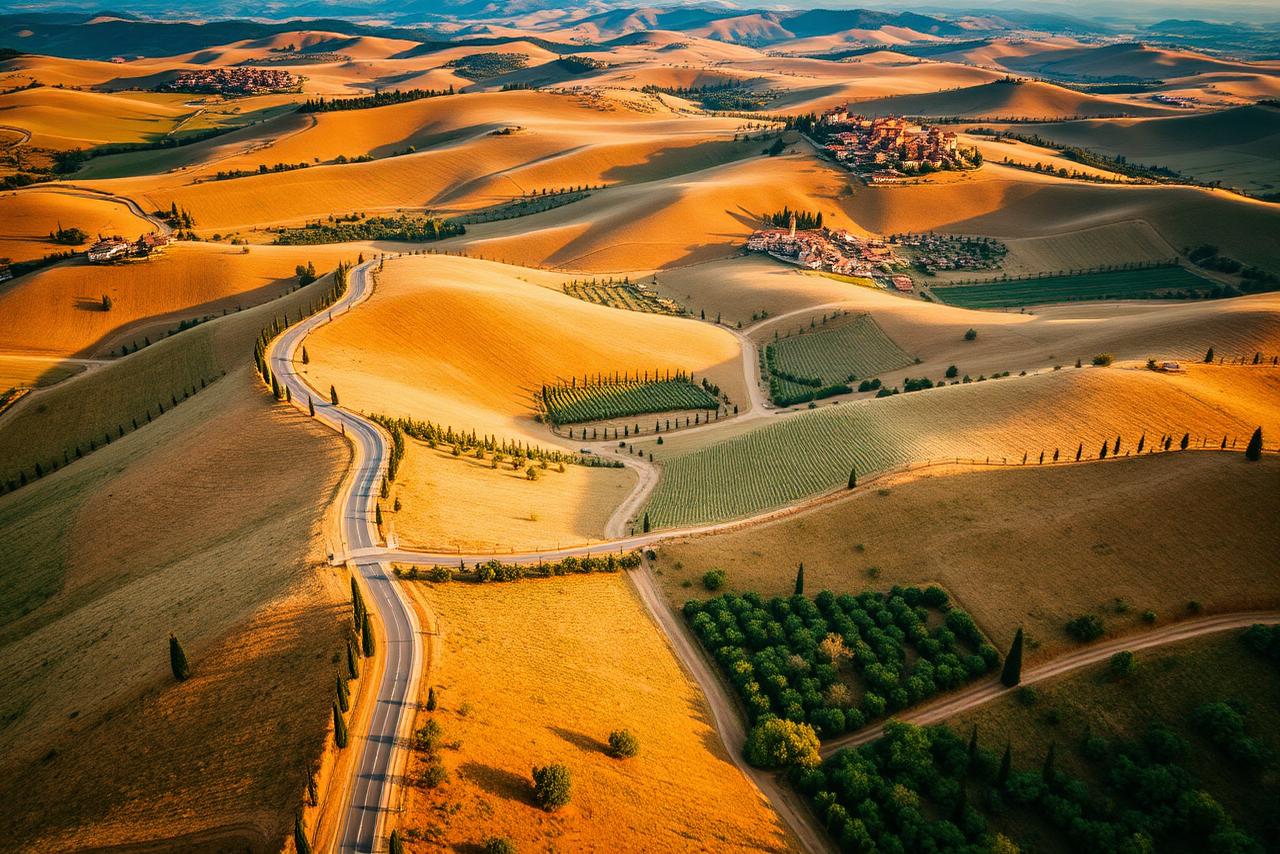
The Val d'Orcia delivers Tuscany's most spectacular scenery, but its remoteness is a genuine practical challenge for families with young children. Many villas are 20-30 minutes from the nearest small town on unpaved white roads. Restaurants open late. The drives to Florence or Pisa are two hours each way. For families with children over 10 or 12 who can manage longer days and are genuinely interested in the landscape and history, it is outstanding, Pienza, Montalcino, and Montepulciano reward curious older children and teenagers. For families with under-5s, a Chianti villa is a more forgiving choice.
Tuscan Coast & Maremma, Best for beach + countryside
The Maremma is the only Tuscany region where a family can combine genuine countryside living with real beach access. The free thermal waterfalls at Saturnia, the long sandy beaches at Castiglione della Pescaia and Marina di Alberese, and the extraordinary Etruscan tufa towns (Pitigliano, Sovana) make for excellent variety. The tradeoff: Florence and Siena are 2-2.5 hours away, so day trips to the classic cultural cities are long commitments. Best for families who want 60% beach and pool, 40% culture.
What to Look for in a Child-Friendly Tuscany Villa
Not every beautiful villa is a safe or practical one for a family holiday. Here are the specific features to check before booking:
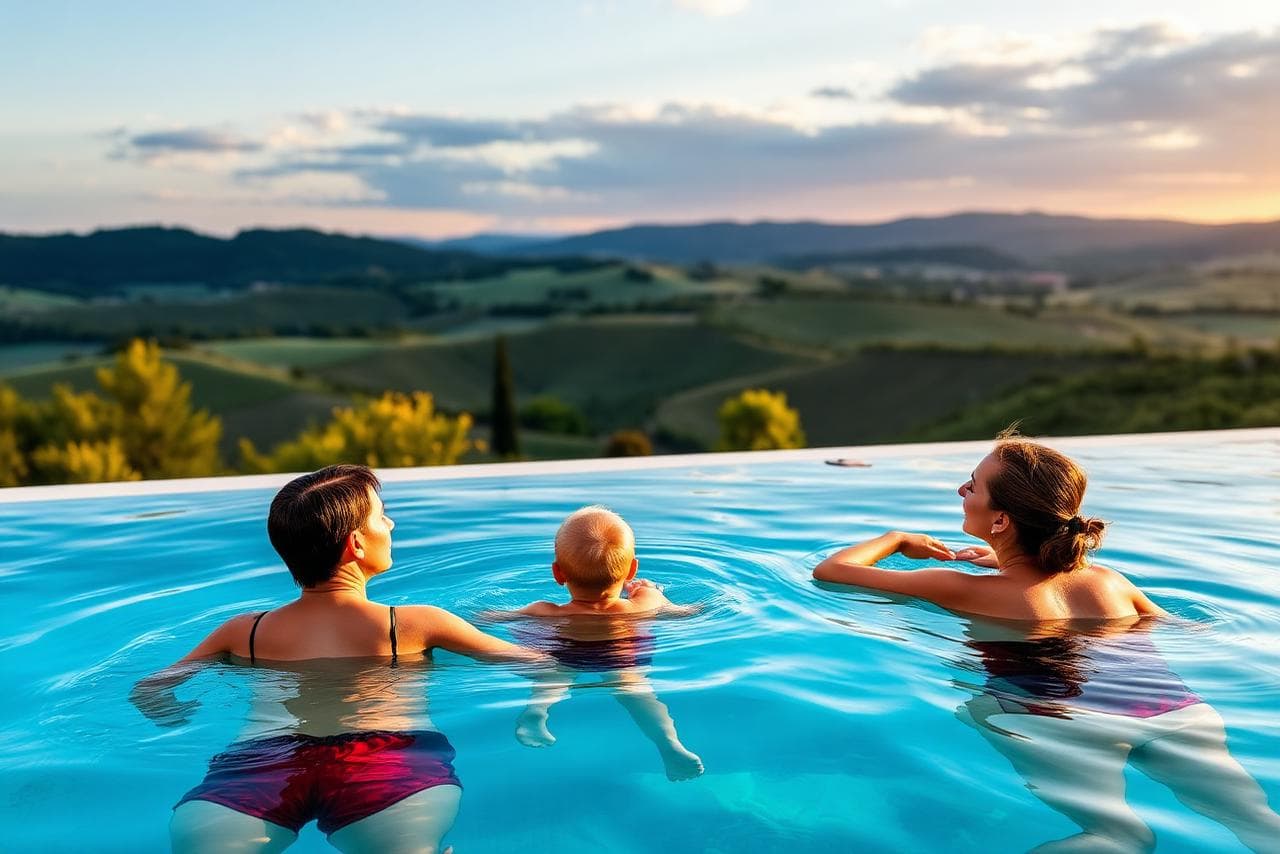
Pool safety: For children under 8, a pool with a shallow end, graduated entry steps, and ideally a separate splash pool or paddling area is the priority. Confirm whether the pool has a safety fence or cover, Tuscany's regulations on residential pool fencing are less strict than in France or Spain, so this varies significantly by property. If the listing doesn't explicitly mention a fenced pool, ask directly before booking.
Garden and outdoor space: A fully fenced garden with no unsealed wells, no sharp drops or terrace edges accessible to young children, and a shaded area for afternoon rest. Many Tuscan properties have beautiful terraces with low railings or no barriers at all, check the photos carefully or ask for confirmation.
Ground-floor bedroom: Essential for grandparents, parents with very young children, or anyone with mobility considerations. Many traditional farmhouses have all bedrooms on upper floors via steep internal staircases, ask explicitly if a ground-floor room is required.
Kitchen: A fully equipped kitchen with enough hob space, fridge capacity for a large group, and a high chair or the ability to source one locally. Our team can arrange cots, highchairs, baby monitors, and a pre-stocked fridge on arrival, contact us before you travel and we'll handle the logistics.
Independence for teenagers and grandparents: For multi-generational groups of 10+, look for properties with an independent annexe, guest cottage, or pool house. Everyone benefits from the balance of shared space during the day and privacy in the evenings.
When to Go: Best Time for a Family Villa Holiday in Tuscany
June is the best overall month. The countryside is at its most vibrant green, the temperatures are warm but not extreme (27-31°C), the pool is swimming-perfect, schools are out from mid-June, and the main tourist sites are significantly less crowded than July or August. Prices are typically 15-20% lower than peak August rates.
September is an equally strong choice, arguably the best of all for families with older children or teenagers. The harvest season begins (olive pressing in October, grape harvest in September in Chianti), the light is extraordinary, the inland temperatures ease to a comfortable 24-28°C, and the summer tourist rush has passed. Sea swimming is still excellent on the Maremma coast through September.
July works well but comes with caveats. Inland temperatures regularly reach 35-38°C in the Val d'Orcia and Crete Senesi, which makes afternoon activities difficult for young children without reliable air conditioning at the villa. The Chianti hills are cooler by 3-5°C. July and August are also when Italian families holiday, roads, restaurants, and hilltop towns are significantly busier.
August is the most expensive month and the most crowded. The best family villas sell out a year in advance for August. If August is your only option, book as early as possible and confirm the villa has reliable air conditioning throughout.
The Best Day Trips from a Tuscany Villa, by Age Group
For all ages: Siena and the Piazza del Campo
Siena is the most child-friendly of Tuscany's major cities. The Piazza del Campo, the enormous shell-shaped medieval square, is one of the great public spaces in Italy, and children understand immediately why it was used as a racetrack (the Palio horse race, July 2 and August 16). The city is compact and walkable, the gelaterias are excellent, and the Duomo's black-and-white striped marble exterior is genuinely dramatic at any age. Allow half a day; park outside the medieval walls and walk in.
For under-10s: Pinocchio Park, Collodi
The Parco di Pinocchio in Collodi, the village where Carlo Lorenzini (Collodi) was born and set his novel, is a charming, low-key theme park built around the story of Pinocchio. Unlike the major theme parks, it is genuinely designed for young children: walkable, beautifully maintained, and small enough to complete in three hours without meltdown. It is 20km west of Lucca and is best combined with a morning in Lucca. Ticket prices are modest; book in advance in July and August.
For families who like walking: San Gimignano and Volterra
San Gimignano's thirteen medieval towers are the most immediately dramatic townscape in Tuscany, and the town rewards an early morning visit before the coach tours arrive. Volterra, 30km southwest, is darker, more austere, and less visited: an Etruscan and medieval hilltop city with a Roman theatre, an alabaster workshop district, and an exceptional Etruscan museum. A combined San Gimignano-Volterra day makes an excellent full-day itinerary from a Chianti or Lucca base.
For teenagers: Florence
Florence rewards teenagers who have some preparation, a brief introduction to the Renaissance, the Medici, and what the Uffizi actually contains makes the visit land completely differently than walking in cold. The Accademia (Michelangelo's David) is the most viscerally impressive single museum experience in Italy. Pre-book timed entry for both the Uffizi and the Accademia; the queues without booking are long. Florence's covered Mercato Centrale is an excellent lunch stop, a food hall on the ground floor, restaurant upstairs.
For all ages: Saturnia thermal pools
The Cascate del Mulino at Saturnia, natural warm thermal waterfalls tumbling into a series of pools on open farmland, are free to visit, open 24 hours, and suitable for all ages. The water temperature is a constant 37°C. The setting is extraordinary: steaming turquoise water against the Maremma landscape, completely without facilities or entrance fees. Bring shoes with grip (the tufa rock underfoot is slippery), towels, and arrive before 10am in summer to avoid the crowds. Located in the Maremma, approximately 2 hours from a Chianti villa.
Eating Out with Children in Tuscany
Italian restaurants are generally very welcoming to children, but there are a few things that make the experience easier. Most traditional trattorias are happy to offer a *mezza porzione* (half portion) of any pasta dish for children, it won't be on the menu but is universally understood. For younger children who won't sit through a long lunch, the Italian habit of arriving early (12:30pm rather than 1:30pm), eating at a relaxed pace, and leaving before the main service rush works well.
Markets are better than supermarkets for provisioning the villa. The Thursday morning market in Greve in Chianti has outstanding local produce, bread, cheese, cured meats, fruit, vegetables, at prices well below the tourist-oriented shops. Saturday market in Pienza for Val d'Orcia guests. Daily covered market in Siena's Campo area for anything in the Crete Senesi. Buy the ingredients, cook in the villa for two or three nights a week, and save the restaurant budget for the evenings that matter.
Cooking classes are one of the most successful family holiday activities in Tuscany. A half-day fresh pasta class where children roll and cut their own tagliatelle is a holiday memory that outlasts any museum visit. Our team can arrange villa-based cooking experiences with local teachers for any group size, ask us before you arrive.
Planning a Multi-Generational Family Villa Holiday
A Tuscany villa is one of the few holiday formats that genuinely works across three generations at once. The shared outdoor spaces, pool, terrace, garden, provide natural gathering points during the day, while bedroom annexes and separate wings provide the privacy that makes a week together sustainable rather than claustrophobic.
For groups with grandparents, the practical priorities are: a ground-floor bedroom suite (avoiding steep staircases), a pool with graduated entry steps rather than a vertical ladder, and proximity to a town with a pharmacy and a good restaurant within easy driving distance. Many of our larger properties are specifically configured for this kind of multi-generational use, see our large villas in Tuscany for family reunions collection (sleeping 10 to 20+ guests across multiple buildings) or browse the full collection and filter by group size.
The rhythms of a villa holiday also suit mixed-age groups well. Grandparents can sit in the shade with a book while children swim; teenagers can disappear to a corner of the garden with headphones; parents can have a quiet hour on the terrace. Nobody needs to be constantly 'on programme.' The villa provides the space for everyone to decompress in their own way.
How Far Ahead to Book and What to Ask
The best family-friendly villas in Tuscany, those with fully fenced pools, multiple ground-floor bedrooms, independent annexes, and proximity to both a supermarket and a good restaurant, are taken early. For July and August departures, the properties that genuinely tick all the family boxes are typically reserved by October or November of the previous year. June and September have more availability, but the most popular villas still go by February or March.
When enquiring, the questions that matter most for families: Is the pool fully fenced? Are there ground-floor bedrooms? What is the condition of the access road (paved or white gravel)? Is air conditioning available in all bedrooms? What is the nearest town with a supermarket and pharmacy? Can you provide cots, highchairs, and a pre-arrival food shop?
Our team handles all of these questions as part of the booking process. We know every property in the collection personally and can match your group's specific needs, ages of children, whether grandparents are coming, what activities matter most, to the right villa in the right region. Get in touch with as much detail as you can and we'll take it from there. Or browse villas by region to start exploring what each area offers.