Tuscan Food Guide: 10 Traditional Dishes You Must Try
Tuscan food is built on a philosophy that sounds simple and delivers something extraordinary: take the finest local ingredients, apply skill rather than complexity, and let flavour do the work. The tradition is called *cucina povera*, peasant cooking, but the results are anything but poor. This guide covers the ten dishes that define Tuscan cuisine, where to find the best versions, and what to drink alongside them.
1. Bistecca alla Fiorentina
The undisputed king of Tuscan food. Bistecca alla Fiorentina is a thick T-bone, typically 1.2-1.5kg, cut from the short loin of white Chianina cattle raised in the Val di Chiana, grilled over blazing oak or chestnut coals until charred on the outside and rare at the bone. It is seasoned only with coarse salt, black pepper, and a drizzle of local extra virgin olive oil applied after cooking.
The non-negotiables: the cut must be *al sangue* (very rare, a warm, pink centre at the bone). The Chianina breed, one of the world's oldest cattle breeds, distinctive for its size and white coat, produces exceptionally lean, flavoursome meat that justifies the premium price. A half-kilo of bistecca per person is the standard portion; it is priced and sold by weight.
Where to eat it: Buca Mario (Florence's oldest restaurant), Trattoria Sostanza on Via della Porcellana, or any agriturismo in the Chianti wine country that rears its own Chianina. In the Chianti villages, the same estate that keeps the cattle will often serve the bistecca at their restaurant, the provenance is impeccable. Drink with: Chianti Classico Riserva or Brunello di Montalcino, our complete guide to Tuscan wine has the full picture.
2. Ribollita
Ribollita, literally 'reboiled', is Tuscany's greatest winter dish and one of the most satisfying things you can eat on a cold evening in a Florentine or Sienese trattoria. It is a thick, dark bread soup built from cannellini beans, cavolo nero (Tuscan black kale), stale unsalted Tuscan bread, celery, carrot, onion, and tomato. The name refers to the tradition of making a large batch and reheating it over the next two days, each reheating deepening and concentrating the flavour.
The bread is not a garnish: it dissolves into the soup, creating a texture somewhere between a thick stew and a very wet bread pudding. A final drizzle of raw extra virgin olive oil at the table is mandatory. The best versions have a slightly scorched bottom from the reheating, which adds a smoky note that no first-day version can replicate.
When to eat it: October to March. Ribollita in July is made with tinned cavolo nero and it shows. Drink with: any young Chianti Classico.
3. Pappa al Pomodoro
Where ribollita belongs to winter, pappa al pomodoro belongs to late summer, the window between July and September when Tuscan tomatoes are fragrant, collapsing, and at their acidic best. The dish is a thick bread and tomato porridge: ripe tomatoes, stale Tuscan bread, garlic, fresh basil, and olive oil, simmered until the bread has absorbed all the liquid and the whole thing becomes one dense, rust-coloured mass.
It is excellent warm, good at room temperature, and unexpectedly fine cold from the fridge the next morning. The key is the tomatoes: the concentrated, sun-ripened flavour of a Tuscan agosto tomato is irreplaceable, which is why ordering this dish outside the August-September window is a gamble.
Where to eat it: Any trattoria with a seasonal menu, a restaurant serving pappa al pomodoro in February is using tinned tomatoes. Drink with: chilled Vernaccia di San Gimignano or a light Rosato.
4. Pici all'Aglione (and al Cinghiale)
Pici are the pasta of the Val d'Orcia and the Sienese countryside, thick, hand-rolled noodles made from just flour and water, no egg, rolled by hand into long irregular tubes resembling fat spaghetti. The irregularity is deliberate: the uneven surface catches sauce in a way that machine-made pasta never quite manages.
The two canonical preparations: all'aglione, a robust, mildly spicy tomato sauce made with aglione della Val di Chiana, a local large-clove garlic variety that is sweet rather than sharp and al cinghiale, a slow-cooked wild boar ragù that is the definitive Sienese pasta dish. If you are staying in a Val d'Orcia villa and visit Pienza, Montalcino, or Montepulciano, order pici at least once. It is the dish that most clearly belongs to this specific landscape.
Where to eat it: Osteria dell'Acquacheta in Montepulciano is considered the benchmark; Trattoria Latte di Luna in Pienza is excellent. Drink with: Vino Nobile di Montepulciano, the local wine was made for this pasta.
5. Crostini Toscani
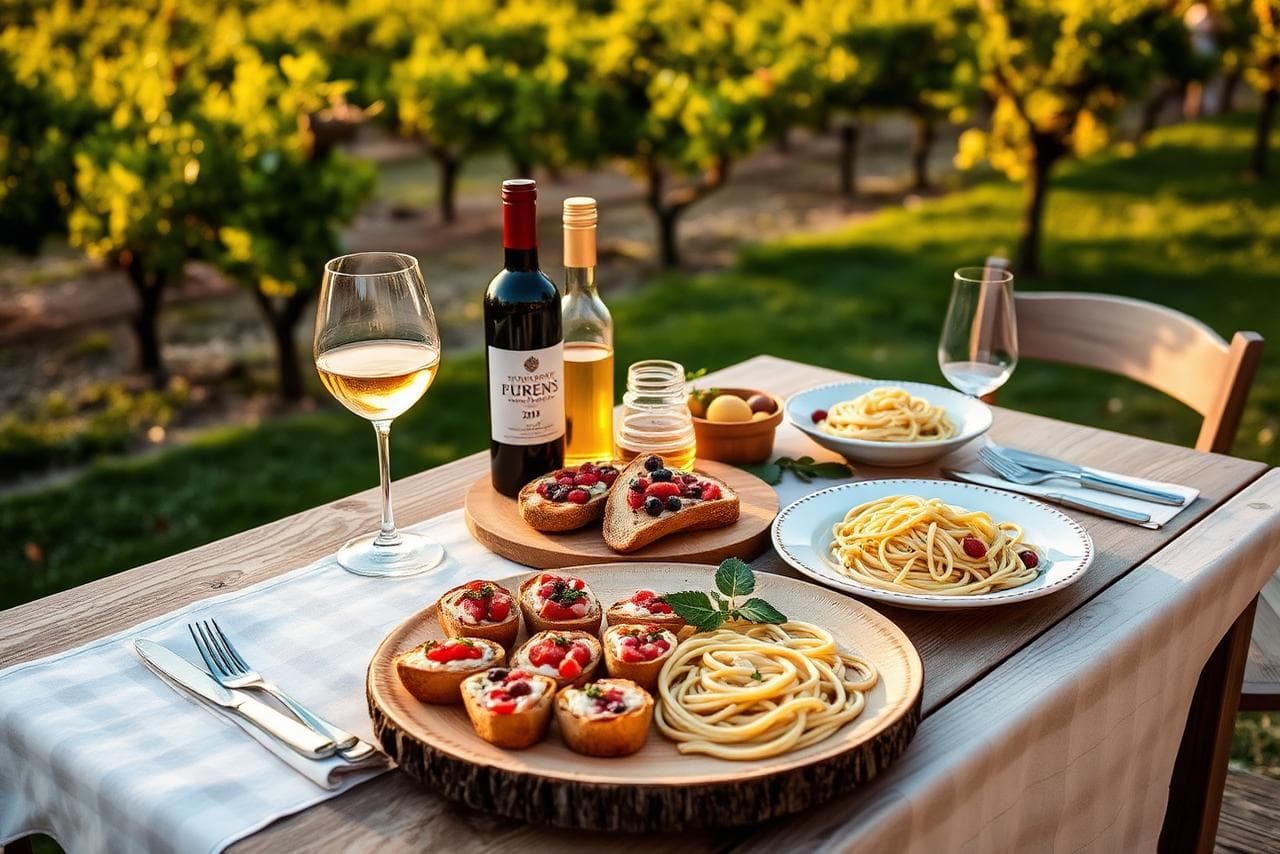
No Tuscan meal begins without crostini. These small rounds of toasted or grilled bread are spread with chicken liver pâté, a mixture of sautéed livers, onion, capers, and anchovy, blended to a smooth, richly savoury paste with a small amount of butter or vin santo to soften the edge. The flavour combination, earthy liver, briny capers, anchovy funk, neutral toasted unsalted bread, is uniquely and completely Tuscan.
Variations exist: a white bean spread (*fagioli*), a mushroom pâté in autumn, or a black truffle version around San Miniato in November. But the chicken liver version is the authentic standard. When a winery or estate offers a crostini tasting with their olive oil, this is always the version to request.
Where to eat them: Every traditional trattoria serves them as the default antipasto. The quality indicator is freshness, made and assembled minutes before serving, not from a batch prepared hours earlier. Drink with: Vernaccia di San Gimignano or Bianco di Toscana.
6. Lardo di Colonnata
This is the dish that surprises most visitors and converts them. Lardo di Colonnata is cured fatback: the thick layer of fat from the back of the pig, seasoned with rosemary, garlic, black pepper, cinnamon, clove, and sea salt, then aged for six months or more in basins carved from Carrara marble in the small mountain town of Colonnata, near Massa-Carrara in northwest Tuscany. The marble maintains a constant cool temperature and imparts a mineral quality to the cure.
The result is silky, yielding fat with a delicate herbal perfume that dissolves on the tongue. It is served in paper-thin slices over warm toasted bread, where the residual heat melts it slightly at the edges. Its IGP (Protected Geographical Indication) status reflects centuries of artisan tradition in one village.
Where to find it: Colonnata itself has producers who sell direct from their workshops, a worthwhile stop if you are visiting Lucca or the Versilia coast. Quality delicatessens throughout Tuscany carry it. Drink with: cold Prosecco or a light Vermentino.
7. Cacciucco alla Livornese
The Tuscan coast has its own food identity, distinct from the inland tradition and cacciucco is its signature dish. This is a thick, spiced fish stew from Livorno, made with at least five types of seafood (the five 'c' letters in *cacciucco* are said to represent five species), cooked in a tomato, garlic, chilli, and red wine base until it becomes a dense, deeply flavoured broth close to a Provençal bouillabaisse but with more heat and more body.
The canonical version uses cuttlefish, octopus, squid, clams, and firm white fish (often monkfish or scorpionfish). It is served over thick-cut grilled bread rubbed with garlic at the bottom of the bowl, which soaks up the broth. The flavour is intense, slightly spicy, and unmistakably coastal.
Where to eat it: Livorno itself, or any reputable fish restaurant along the Maremma coast at Castiglione della Pescaia or Orbetello. Avoid inland versions made with frozen seafood. Drink with: a crisp Vermentino or Ansonica from the Tuscan islands.
8. Truffle Dishes (Tartufo Bianco e Nero)
Tuscany is one of Italy's great truffle regions. The white truffle of San Miniato (*tartufo bianco di San Miniato*) rivals the more celebrated Alba truffle from Piedmont in fragrance and prestige. The black truffle, found across the Crete Senesi, the Maremma, and Umbrian border areas, is more widely available and more affordable. Both are used in Tuscan restaurants from October through January.
The best truffle preparations are always the simplest: shaved raw over fresh egg tagliatelle with butter and aged Parmigiano, folded into a soft scrambled egg, or spread on warm crostini with salted butter. Any strong heat destroys the volatile aromatic compounds responsible for white truffle's extraordinary scent, subtlety is the point.
When and where: October-January for white truffle; the San Miniato White Truffle Festival (held across three November weekends) is the major regional event, with producers, tastings, and truffle hunts. Drink with: a structured white Burgundy-style wine, or a well-aged Vernaccia di San Gimignano Riserva.
9. Cantucci e Vin Santo
The canonical end to any Tuscan meal: twice-baked almond biscuits (*cantucci*, also called *biscotti di Prato*) served alongside a small glass of amber vin santo, the traditional Tuscan dessert wine made from dried Trebbiano and Malvasia grapes, aged in small barrels (*caratelli*) for three to six years. You dip the cantucci; the biscuit softens slightly in the honeyed, nutty wine. The combination is simple, perfect, and completely satisfying.
Vin santo quality varies enormously. Mass-produced versions are sweet and undistinguished; serious aged examples from estates like Isole e Olena, Avignonesi (*Occhio di Pernice*), or San Giusto a Rentennano approach the complexity of great Sauternes. When a restaurant offers their own estate vin santo, it is always worth asking for a glass. Read more in our guide to Tuscan wine.
Where to buy cantucci: The Antonio Mattei bakery in Prato has been making the original *biscotti di Prato* since 1858, the blue paper bag is the benchmark.
10. Fettunta, New-Season Olive Oil on Grilled Bread
The simplest dish on this list and, in November and early December, arguably the most anticipated by Tuscans themselves. Fettunta is grilled, unsalted Tuscan bread rubbed with raw garlic and drizzled generously with freshly pressed extra virgin olive oil, the *olio nuovo* that Tuscan producers press from late October onwards. Nothing else.
The new-season oil from Tuscany, particularly from estates in the Chianti hills, around Lucca, and the Maremma, has a vivid, grassy, peppery intensity that fades over the following months as the oil settles. The window for truly fresh *olio nuovo* is roughly six to eight weeks. Producers across the region hold open days and olive oil tastings in November; if your villa holiday falls during this period, prioritising one of these visits is strongly recommended.
Where to find it: Any olive oil estate or Chianti wine estate that also presses oil. Buying direct from the producer ensures the freshest pressing and supports the artisan tradition. Drink with: whatever chilled white wine is open.
Cook Tuscan Food in Your Villa
One of the greatest pleasures of a Tuscany villa holiday is cooking with ingredients bought that morning from a local market. The Thursday market in Greve in Chianti, the Saturday market in Pienza, and the covered daily market inside Siena's Campo area are all outstanding. Most of our villas have fully equipped kitchens; several offer private chef experiences or can connect you with local cooking teachers who come to the property.
If you're planning to cook in the villa, our team can recommend the best local producers, farms, and market days for whatever region you're based in. Get in touch before you arrive and we'll put together a local food itinerary alongside your villa booking. Or browse villas by region, each destination page notes the best food markets and producers nearby.