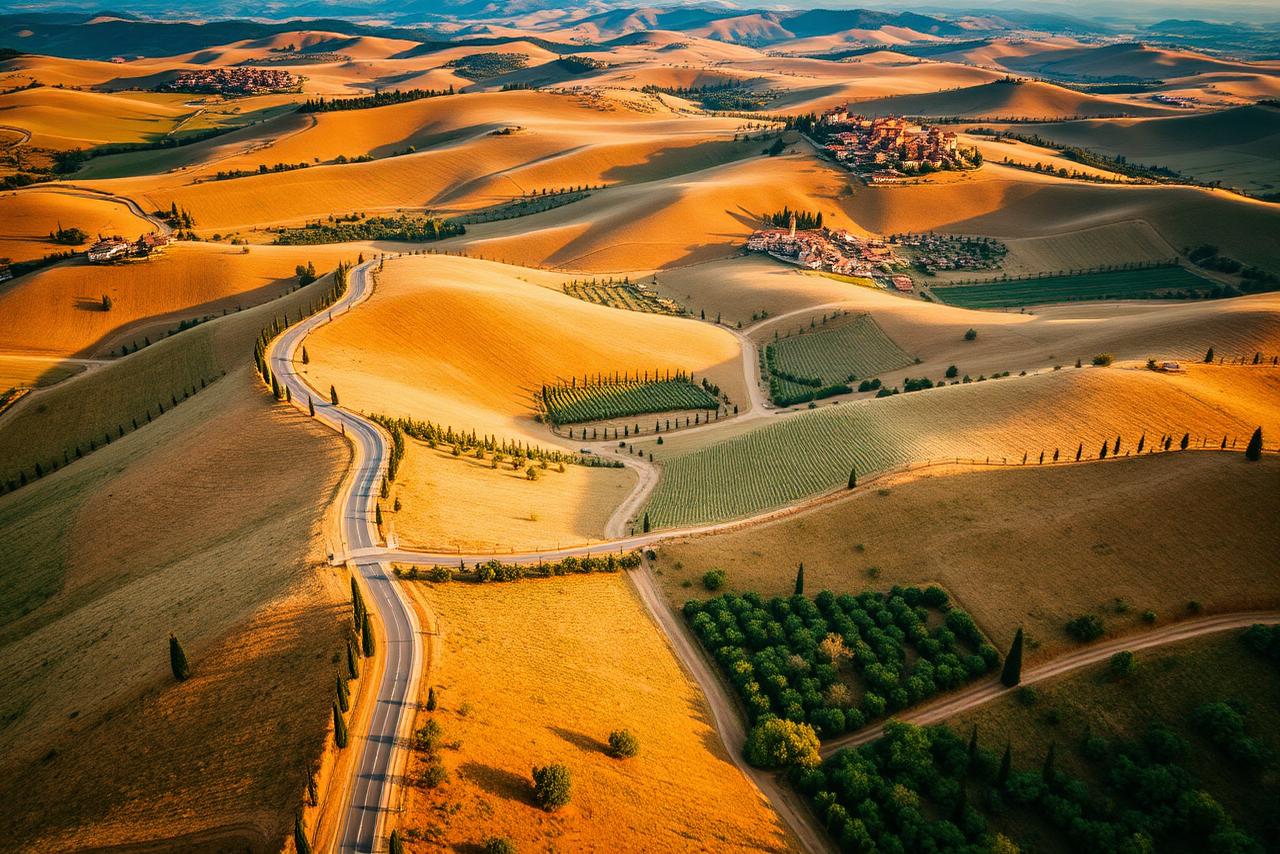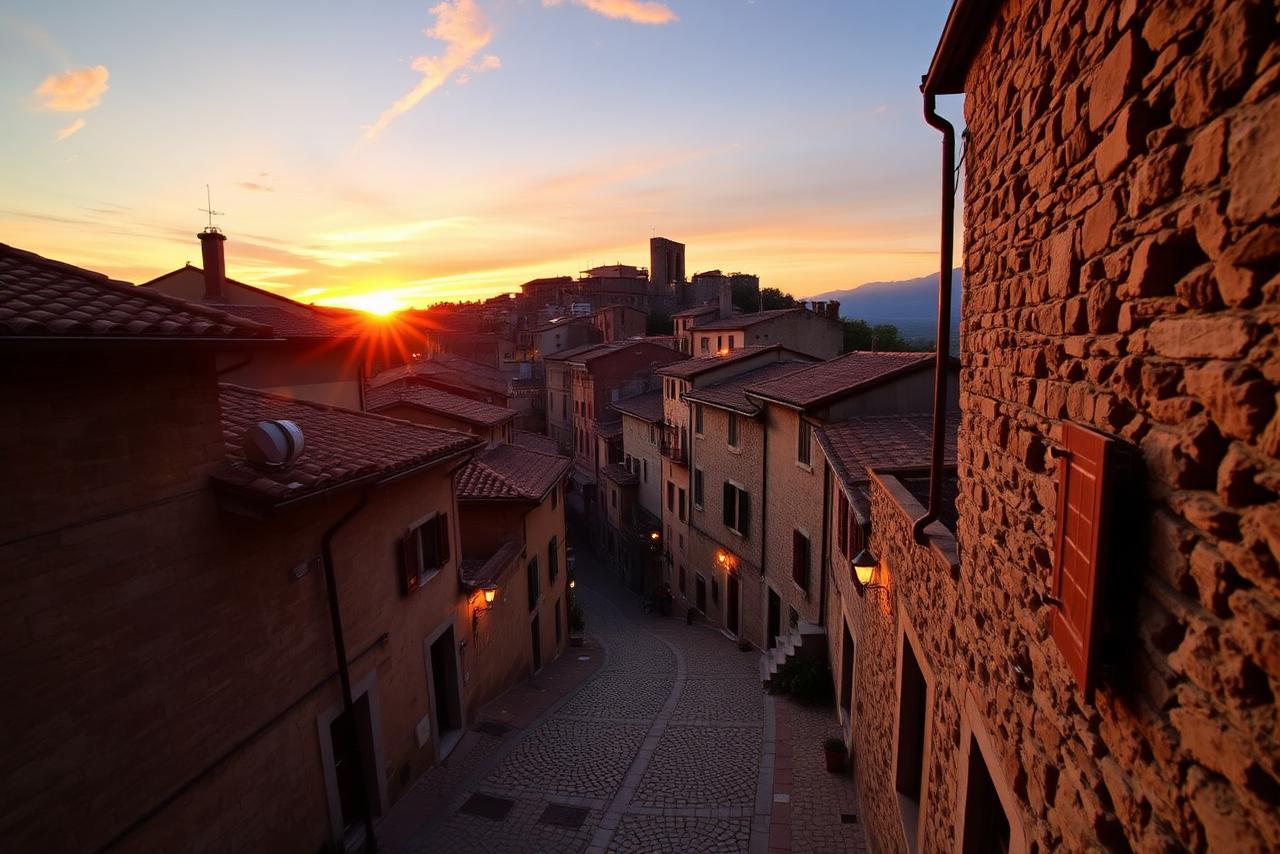
7 Hidden Hilltop Towns in Tuscany Worth the Detour
Everyone knows San Gimignano, Siena, and Cortona and they deserve their reputations. But Tuscany's real magic often lies in the towns that don't make the front pages: the places where daily life hasn't changed much in centuries, where you'll have the piazza almost to yourself, and where a café espresso still costs €1.
These seven towns share a common character, medieval stone, panoramic hilltop positions, authentic local life, but each has a distinct personality shaped by history, geography, and what the land beneath it produced. This guide covers what to see in each, when to visit, how long to allow, and how to combine them into a day trip from wherever you're based.
1. Pitigliano, Tuscany's 'Little Jerusalem'
Rising from a tufa cliff above deep gorges in the far south of Tuscany, Pitigliano is one of the most visually dramatic towns in the entire region. The approach along the SP4 from Manciano, the town appearing to grow organically from the rock itself, has stopped more than a few drivers in their tracks. It earns the detour on that approach alone.
What to see in Pitigliano
The historic centre sits on a plateau of volcanic tufa, and the town has been inhabited since Etruscan times. The most unusual sight is the network of cave dwellings (*cavoni*) carved directly into the cliff face below the town, for centuries these housed wine cellars, storerooms, and even animal shelters. Some are now open for guided visits. The 16th-century Palazzo Orsini houses the Museo Civico Archeologico, with an impressive Etruscan collection found in the surrounding necropolises.
The town's other defining feature is its Jewish heritage. Between the 15th and 18th centuries, Pitigliano harboured one of the largest Jewish communities in Tuscany, an important refuge when Jews were expelled from the Papal States and the Spanish territories. The restored Synagogue and Jewish Quarter (*piccola Gerusalemme*, Little Jerusalem) is one of the best-preserved in central Italy and is well worth a 45-minute visit.
Practical details
Allow: 3-4 hours minimum. Park at the free car parks just outside the walls, the streets inside are very narrow. Best restaurant: Trattoria dell'Orso, Via della Costituzione, honest Maremma food, wild boar pappardelle, local white wine. Combine with: Sorano (20 minutes east) and the Terme di Saturnia (30 minutes south) for a full day.
Pitigliano lies in the Maremma and Tuscan Coast region, ideal for villa guests staying in this area. See also our map of Tuscany for orientation.
2. Sorano, Etruscan Gorges and the Vie Cave
Twenty minutes east of Pitigliano, Sorano is its quieter, wilder neighbour, smaller, less visited, and arguably more atmospheric. The town perches above the gorge of the Lente river, crowned by the massive 14th-century Fortezza Orsini that dominates the skyline. The pale tufa walls glow a warm gold in late-afternoon light.
What to see in Sorano
The Orsini fortress itself is excellent, a well-preserved example of Renaissance military architecture, still largely intact. But the real draw lies outside the town walls: the vie cave, ancient pathways cut 10-20 metres deep into the tufa rock by the Etruscans, their purpose still partially debated (likely religious procession routes and funeral paths to necropolis sites). Walking these rock corridors, overhung with moss and ferns and dripping with silence, is one of the most genuinely otherworldly experiences in Tuscany.
The Archaeological Park of the Città del Tufo, which covers Sorano, Pitigliano, and the nearby village of Sovana, contains dozens of Etruscan rock tombs, altars, and the vie cave network. Sovana (10 minutes north of Sorano) is itself worth a stop: a remarkably intact medieval village with a cathedral that seems impossibly grand for its size, and some of the finest Etruscan tomb façades in the region.
Practical details
Allow: 3-4 hours for Sorano + a vie cave walk. A guided tour of the Archaeological Park is worthwhile, book at the ticket office in Sorano or Sovana. Combine with: Pitigliano (20 minutes west). The Pitigliano-Sorano-Sovana triangle makes an outstanding full day from a Maremma villa.
3. Massa Marittima, Cathedral Piazza and Mining Heritage
In the metalliferous hills of the northern Maremma, Massa Marittima occupies a category of its own. It was a free commune in the 13th century, powerful enough to produce its own *Codice Minerario*, one of Europe's earliest mining law codes and its wealth is evident in the extraordinary Piazza Garibaldi, one of the most harmoniously proportioned medieval squares in Tuscany.
What to see in Massa Marittima
The Cathedral of San Cerbone dominates the main piazza with a restrained Pisan Romanesque facade that rewards close examination, look for the carved marble animals and biblical scenes on the lower register, and the later Gothic upper section added in the 14th century when the comune was at its peak. Inside, there is a painting by Duccio di Buoninsegna and a remarkable 14th-century Gothic arch baptismal font.
The town divides into two distinct parts: the lower *Città Vecchia* (old town) around the cathedral, and the upper *Città Nuova* (new town), added in the 14th century and connected to the lower by a steep medieval bridge and fortified street passage. The upper section houses the remarkable Museo della Miniera, a walk-through model of the underground galena and iron mines that sustained the town for centuries, with original equipment and mining tunnels to explore. Unusual and genuinely interesting.
Practical details
Allow: 3-4 hours. Best lunch: Osteria dei Sapori Maremma, near the main piazza, excellent *acquacotta* (the traditional Maremma peasant soup) and local Morellino di Scansano wine. Best timing: Thursday morning for the weekly market in the lower town. Combine with: a drive through the Colline Metallifere landscape, or add a Maremma coast afternoon.
4. Cetona, Val di Chiana Views and an Unspoiled Piazza
Close to the Umbrian border near Sarteano, Cetona is the kind of small Tuscan town that inspires people to start looking at property listings. It is small (population around 2,800), very well-preserved, and almost entirely free of the tourist infrastructure that has changed the character of more famous hilltop towns. The central Piazza Garibaldi is lined with travertine arcades and shaded by linden trees.
What to see in Cetona
The town is built in a near-perfect spiral up the side of Monte Cetona, with the hilltop rocca at the summit offering views across the Val di Chiana to Cortona on a clear day. The Museo Civico per la Preistoria del Monte Cetona documents the prehistoric settlements that have been excavated on the mountain, an interesting complement to the Etruscan heritage of many neighbouring towns.
The Saturday morning market in the piazza is a genuine local affair: fruit and vegetable stalls, a wood-fired bread van from the bakery below the walls, a cheese stall from a local pecorino producer. The bakery (Forno Artigianale Cetona, just outside the south gate) is worth arriving for independently, the *schiacciata all'olio* and chestnut flatbread are outstanding.
Practical details
Allow: 2-3 hours, more if you hike to the rocca or eat a long lunch. Combine with: Sarteano (10 minutes north, good Etruscan museum) and San Casciano dei Bagni (15 minutes south, spectacular ancient thermal pools under ongoing excavation). Cetona makes a good half-day addition to a longer Val d'Orcia itinerary.
5. Poppi, The Best-Preserved Medieval Castle in Tuscany
The Casentino valley in eastern Tuscany, the upper valley of the Arno, between the Apennine mountains and the Pratomagno ridge, is one of the most overlooked corners of the region. Poppi, perched above the valley floor, is its principal town, and the Castello dei Conti Guidi that crowns it is arguably the finest surviving medieval castle in all of Tuscany.
What to see in Poppi
The Guidi castle was begun in the late 13th century and is attributed (without certainty) to Arnolfo di Cambio, the same architect behind Florence's Palazzo Vecchio and the resemblance is striking. The interior contains a fine courtyard with loggia, an impressive great hall, and a library of 600 medieval manuscripts. The views from the tower across the Casentino take in the entire upper Arno valley.
The town below the castle is also worth exploration: a covered medieval main street (*borgo*) with arcades, a good local museum, and a small but atmospheric weekly market. From Poppi, the ancient Camaldoli monastery, founded in 1012 in the forests above the valley, is 20 minutes by car. The chestnut and beech forests of the Casentino National Park surrounding it are among the most ancient and least-disturbed in central Italy.
Practical details
Allow: 3-4 hours for Poppi town and castle, plus another 2 hours if visiting Camaldoli. Best lunch: Ristorante La Torricella, overlooking the valley, local pasta with porcini (in season), chestnut flour desserts. Combine with: Bibbiena (20 minutes south) and the hermitage at La Verna, where St Francis received the stigmata in 1224.
6. Barga, Romanesque Duomo and the Jazz Festival
In the Garfagnana hills of northern Tuscany, where the Apennines press close to the Apuan Alps and the valleys are deep and wooded, Barga has a character unlike any other Tuscan hilltop town. It feels more Emilian or Ligurian than Tuscan: the buildings are taller, the stonework greyer, the light softer. The town has a long connection with Scotland (mass emigration in the 19th and early 20th centuries) and an even longer connection with opera.
What to see in Barga
The Duomo di San Cristoforo is Barga's centrepiece, a Romanesque cathedral of pale grey Apuan marble, raised on a high terrace with views to the Apuan Alps on clear days. Inside, a remarkable 12th-century carved marble pulpit by Biduino stands on columns supported by a crouching lion and a crouching man. The polychrome terracotta figure of San Cristoforo in the apse is one of the most affecting medieval objects in Tuscany, worth the journey alone.
In late July, the town hosts the Barga Jazz Festival, one of the oldest jazz festivals in Italy, drawing international artists to perform in the cathedral square, the town's medieval streets, and the surrounding villages. The Opera Barga festival in August-September further adds to the town's surprising cultural density for a place of just 10,000 people.
Practical details
Allow: 3 hours minimum; stay for dinner if the opera or jazz programme allows. Best restaurant: Il Vecchio Mulino, Via della Libertà, exceptional local pasta with chestnut flour and local cured meats. Best base: Barga makes an excellent day trip from a Lucca villa or a full stay if you want a cooler, less-visited northern Tuscany experience. Combine with: Castelnuovo di Garfagnana (15 minutes north, impressive Rocca Ariostea fortress), and a drive through the Garfagnana to the Apuan Alps.
7. Montemerano, Medieval Village and the Saturnia Hot Springs
The final entry on this list is less about monuments and more about atmosphere and convenience. Montemerano is a tiny medieval village in the hills above the Albegna valley near Manciano. Its fame among Italians rests on the Ristorante Caino, a Michelin two-star restaurant that has occupied an ancient stone house in the village for decades and counts among the finest tables in all of Tuscany. But even without a dinner reservation, Montemerano rewards a stop.
What to see in Montemerano
The village is compact, a single ring of medieval walls, a main gate, a central square with a church containing a Sienese school altarpiece, but it has a concentration of charm that outweighs its size. The views south towards Monte Argentario and the Tyrrhenian coast are exceptional on a clear day.
The real reason to combine Montemerano with the rest of your day is Terme di Saturnia, just 8 kilometres east: an ancient travertine cascade where naturally warm sulphurous spring water (37°C year-round) flows over a series of natural pools into the Albegna river. The outdoor cascade falls (*cascate del molino*) are free to use, open 24 hours, and genuinely spectacular, arguably the most memorable natural bathing spot in all of Tuscany. Arrive before 9am to park; by 11am the site is busy in summer.
Practical details
Allow: 1-2 hours for Montemerano village, 2-3 hours for the hot springs. Dinner: Ristorante Caino requires booking months in advance for weekend tables; weekday tables in shoulder season are more accessible. Combine with: Pitigliano (30 minutes east) for a full day anchored in southern Maremma. The entire cluster, Pitigliano, Sorano, Montemerano/Saturnia, makes one of the best days out from a Maremma villa.
How to Plan Your Hilltop Town Day Trips
The seven towns above divide naturally into geographical clusters based on where you're staying:
From a Maremma or Tuscan Coast villa: Pitigliano + Sorano + Montemerano/Saturnia as one day; Massa Marittima as a separate half-day. See our Maremma destination guide for villa options in this area.
From a Val d'Orcia or Chianti villa: Cetona + San Casciano dei Bagni as a half-day; Massa Marittima or Pitigliano as a longer full-day drive. See our Val d'Orcia guide and Chianti guide for suitable villas.
From a Lucca or Versilia villa: Barga + the Garfagnana as a half-day. The Casentino (Poppi) is a 2-hour drive, better combined with a Florence visit.
The key principles for any of these towns: arrive early (before 10am in summer, the car parks fill, and the piazzas empty by midday heat), park outside the walls (most historic centres are ZTL restricted or too narrow to drive), eat where locals eat (the best places rarely advertise heavily), and don't rush. These towns reveal themselves slowly.
For a broader regional overview, see our guide to the best areas to rent a villa in Tuscany or our Tuscany map guide for geographic orientation.