Italian Accommodation Types: Villa, Agriturismo, Fattoria & More
Italy uses a handful of overlapping terms for countryside accommodation, and the same property might be marketed as a villa, a casale, a casa colonica or a fattoria depending on who's writing the listing. Some terms are legal designations with specific requirements (agriturismo was created by Italian national law 730 in 1985 and is tightly regulated). Others are descriptive and used loosely. This guide explains each term, what to actually expect from a stay, and which type suits which kind of holiday.
Italian accommodation types at a glance: Villa (private rental, exclusive use), agriturismo (working farm with guest rooms, legally regulated), fattoria (large agricultural estate), podere (small farmstead), casa colonica or casale (architectural term for the classical Tuscan farmhouse), borgo (small hamlet rented as a single property), castello (castle), palazzo (urban townhouse), tenuta (estate, often wine-focused), and albergo diffuso (scattered hotel across village houses).
Villa
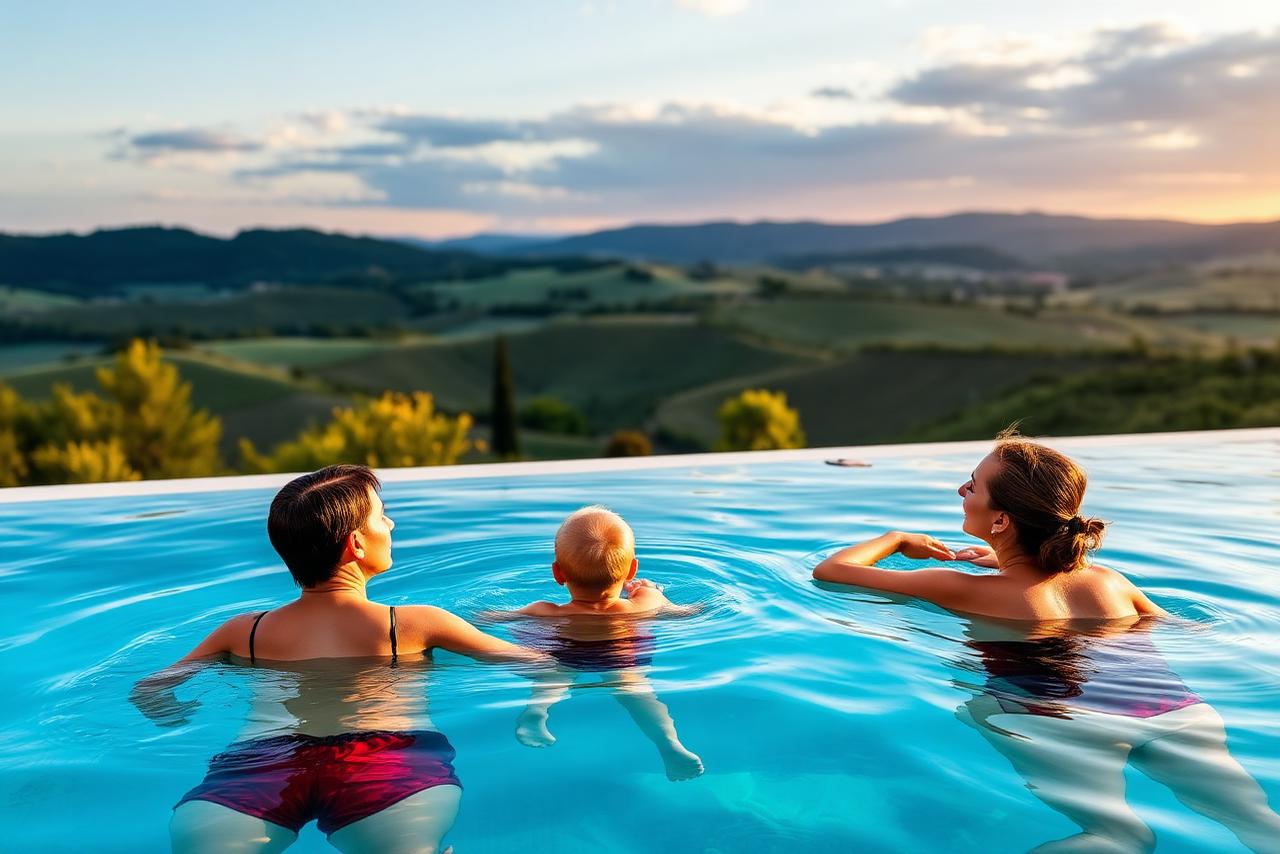
The most familiar term to international visitors, and also the most flexible. In Italian property usage, a 'villa' simply means a private free-standing house, typically with land, often historically associated with a noble family or wealthy landowner. For holiday rental purposes, a villa is the model most international guests have in mind: exclusive use of the whole property, your own pool, your own kitchen, no shared spaces with other guests.
Villas range from small two-bedroom conversions to multi-building estates sleeping 20 or more. The defining feature is exclusivity, the property is yours for the rental period. There are no other guests, no shared facilities, no breakfast service unless you've separately arranged a private chef or housekeeper.
Best for: Couples, families and groups who want full privacy and the freedom to set their own daily rhythm. Tuscany's villa rental market is the most developed in Italy, with the highest density of properties in Chianti and the Val d'Orcia.
Agriturismo
The most regulated of the categories. Agriturismo (literally 'agricultural tourism') was created by Italian national law 730 in 1985 to allow working farms to host guests and diversify their income. To call itself an agriturismo, a property must legally be a working agricultural operation (producing wine, olive oil, cheese, vegetables, or rearing livestock), derive a meaningful part of its income from farming rather than tourism, source meals from the farm or local producers, and register with the regional agritourism authority.
In practice, an agriturismo can range from a basic farm with a few rooms and shared breakfast to a luxurious estate with a swimming pool, restaurant, wine cellar and tasting room. The shared characteristic is the farm context, you'll see vines, olive trees, animals or vegetable gardens, and breakfast typically includes farm-produced jams, honey, eggs and cheese.
Most agriturismi rent individual rooms or apartments rather than the whole property, so you're sharing the grounds and breakfast room with other guests, similar to a B&B with a rural twist. A growing minority offer exclusive-use rental of the entire property, which blurs the line with traditional villa rental.
Best for: Solo travellers, couples and small families who want an authentic working-farm atmosphere, breakfast included, and an affordable price point. Not the right choice for groups wanting exclusive use of an entire property.
Fattoria
Fattoria literally means 'farm' but in Tuscan usage typically refers to a larger agricultural estate, often a historic property of several hundred hectares with a main villa, multiple farmhouses, vineyards, olive groves, and frequently its own wine label. Fattoria di Felsina in Chianti, Fattoria Le Pupille in the Maremma, and Fattoria dei Barbi in Montalcino are well-known examples, all working estates producing serious wine.
When a fattoria offers accommodation, it's typically in converted farmhouses (poderi) scattered across the estate rather than in the main villa. The experience combines villa-style privacy (each farmhouse is exclusively yours) with the broader context of the estate, you can walk in the vineyards, attend cellar tastings, and often eat at the estate's restaurant or order a chef from the main farmhouse.
'Fattoria' in a property name usually signals scale and seriousness, these are working estates, not just country houses, and the wine, oil and other estate products are typically excellent.
Best for: Couples and groups who want villa privacy plus the food-and-wine context of a serious agricultural estate. Often the strongest value proposition for guests who care about direct producer access.
Podere
Podere is the term for a smaller individual farmstead, typically a single farmhouse with a few hectares of land. In Tuscan agricultural history the podere was the unit a single sharecropper family worked under the mezzadria system that dominated rural Tuscany until the 1960s. Many of the farmhouses now rented as villas were originally poderi within a larger fattoria estate.
For accommodation purposes, podere in a property name typically indicates a modest single-building farmhouse, usually with a pool added during the renovation. It often appears alongside a place name (Podere del Sole, Podere Santa Caterina, Podere La Casetta).
Best for: Small groups and families wanting an authentic small-scale farmhouse rather than a grand estate.
Casa Colonica and Casale
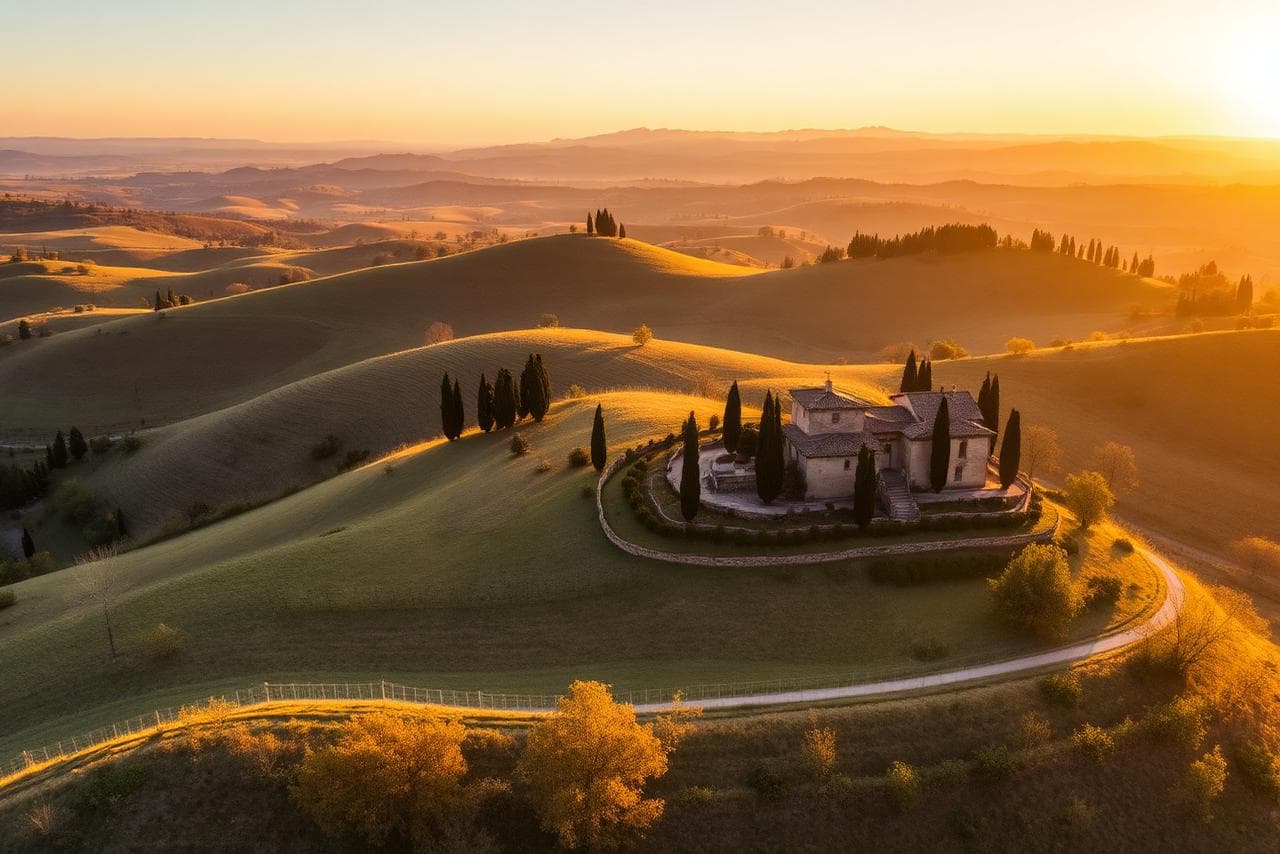
Casa colonica is the architectural term for the classical Tuscan farmhouse, typically a two-story stone building with a pitched terracotta roof, a colombaia (dovecote tower) on one end, an outdoor brick oven, and characteristic exposed-beam ceilings inside. It refers to the building type itself, not a level of service. Most rented Tuscan villas are converted case coloniche.
Casale is essentially a synonym for casa colonica, the same classical Tuscan farmhouse, sometimes used to imply a more compact version. The terms are used interchangeably in property listings, and seeing either in a description tells you the building has the visual cues of the classic Tuscan farmhouse: stone walls, terracotta roof, exposed beams, terracotta floors.
Borgo
Borgo is the term for a small hamlet, typically a cluster of stone buildings (a chapel, several houses, a barn or two) that grew up around a single estate or along a country road. Some borghi have been bought as a single unit and converted into multi-building villa rentals, where you rent the entire hamlet, multiple separate buildings sharing grounds, pool and often a communal dining space.
Borgo rentals work well for large multi-generational groups or wedding parties because they offer the privacy of separate buildings (grandparents in one cottage, teenagers in another) with the social space of a shared courtyard or terrace.
Best for: Large groups of 15 to 30+ who want exclusive use of a hamlet-scale property with multiple independent buildings. See our large group villa collection for borgo-format properties currently available.
Castello
Castello literally means 'castle' and refers to historic fortified or castle-style buildings. In Tuscany these range from genuine medieval fortresses (rare in the rental market, occasionally available as exclusive-use properties for weddings) to renamed historic villas in castle style. A serious castello offers grand architecture, large reception rooms, often crenellations and a tower, and a price tag to match.
Best for: Weddings, milestone celebrations, and high-budget groups who want the cinematic Italian-castle experience. See our wedding villa collection for castle-format wedding venues.
Palazzo
Palazzo refers to a noble townhouse or grand urban building, typically in a historic city centre (Florence, Lucca, Siena). A holiday-rental palazzo offers historic architecture, frescoed ceilings, and a city-centre location, in contrast to the rural villas covered elsewhere in this guide.
Best for: City-break visitors who want characterful private accommodation in central Florence, Lucca or Siena rather than a hotel.
Tenuta
Tenuta means 'estate' and is similar in scale to fattoria, but used more often for properties whose primary product is wine. Tenuta San Guido (producer of Sassicaia, the original Super Tuscan), Tenuta dell'Ornellaia and Tenuta Argentiera are all major Tuscan estates. When tenuta appears in a holiday property name, expect serious agricultural context, often with an attached restaurant and a cellar tour programme.
Best for: Wine-focused holidays where the estate itself is part of the experience. The Bolgheri area on the Tuscan coast has the highest concentration of tenuta-scale wine estates.
B&B and Albergo Diffuso
Italian B&Bs are a regulated category similar to the British version, typically a converted private home (or part of one) where you rent a room and breakfast is included. Italian B&B owners are required to live on the premises, which distinguishes B&B from a standard apartment rental. The atmosphere is personal and often involves direct interaction with the family running the property.
Albergo diffuso (literally 'scattered hotel') is a newer Italian concept invented in the 1980s for converting depopulated historic villages into a single hotel by renovating individual houses across the village and operating them centrally. Guests stay in different houses around a village (each a self-contained room or apartment) but share centralised reception, breakfast and concierge services. Most albergo diffuso properties are in southern Italy and the smaller mountainous regions; a handful exist in Tuscany.
Best for: Solo travellers, couples and cultural visitors who value local interaction over privacy.
At a Glance: Comparing the Main Types
| Type | Exclusive use? | Working farm? | Typical size | Best for |
|---|---|---|---|---|
| Villa | Yes | Sometimes | 2-14 bedrooms | Couples, families, groups |
| Agriturismo | Usually no | Yes (legally required) | Individual rooms | Solo, couples, budget |
| Fattoria | Sometimes | Yes (large estate) | Multiple farmhouses on estate | Groups + wine focus |
| Podere | Yes | Sometimes | Single farmhouse | Small groups |
| Casa colonica / Casale | Yes | No (architectural term) | Single farmhouse | Anyone (descriptive) |
| Borgo | Yes (whole hamlet) | No | Multi-building hamlet | Large groups (15+) |
| Castello | Yes | No | Castle-scale | Weddings, milestones |
| Palazzo | Yes | No | Urban townhouse | City-break visitors |
| Tenuta | Sometimes | Yes (wine estate) | Multiple farmhouses on estate | Wine-focused trips |
| B&B | No | No | A few rooms | Solo, couples |
| Albergo diffuso | No (room-only) | No | Village-wide | Cultural travellers |
Which One Should You Choose?
For most international villa holidays in Tuscany, a private villa (whether marketed as casale, casa colonica, podere or just villa) is the right choice, exclusive use, your own pool, your own kitchen, freedom to set your own pace. The term used in the marketing rarely matters; what matters is the property's specific features.
If you want a working-farm atmosphere with breakfast included and don't need exclusive use, agriturismo is the authentic Italian option, often at a notably lower price point than villa rental.
For large groups (15+), look at borgo rentals (multiple buildings sharing grounds) or large fattoria properties (multiple farmhouses on a single estate). Our guide to large-group villas in Tuscany breaks down which format suits which kind of group event.
For weddings and milestone celebrations, castello properties and major fattoria estates offer the grand-scale Italian experience. See our wedding villas in Tuscany collection for current availability.
For city-centre stays, palazzo rentals provide private accommodation in historic Florence, Lucca or Siena without the impersonality of a hotel.
For more on choosing the right area for your trip, see our regions of Tuscany guide and our best areas to rent a villa in Tuscany.
Note: The categories above are summarised for general guidance and reflect common usage in the Italian villa rental market. Specific properties may operate under different regional licences, blend categories (for example agriturismi running as exclusive-use villas), or use these terms more loosely in marketing than the legal definitions strictly allow. Always confirm the exact category, services, inclusions and any restrictions with the property or your rental specialist before booking. The 1985 agriturismo legislation has also been refined by regional law since enactment; specifics differ between Italian regions.